Category Archives: Discovering Nature and the Great Outdoors

Northwest Passage Trip-Day 1 & 2 – The Tallest of the Tall

At the end of 2015, we made a decision to visit Tyler in Northern California in 2016, and began planning a trip that would take us through the Pacific Northwest…..and beyond. We were excited to visit an area we’ve never been to before, and follow in some of the footsteps of the original Lewis & Clark expedition of 1804-1806. So, after traveling 2 weeks and 4,313 miles (RT from San Francisco),through 5 states, and stops in 15 National Parks, Forests, Recreation Areas, Wildlife Refuges and 8 State Parks, this is the first blog in a summary of our long, but awesome, journey!

The Big Ones

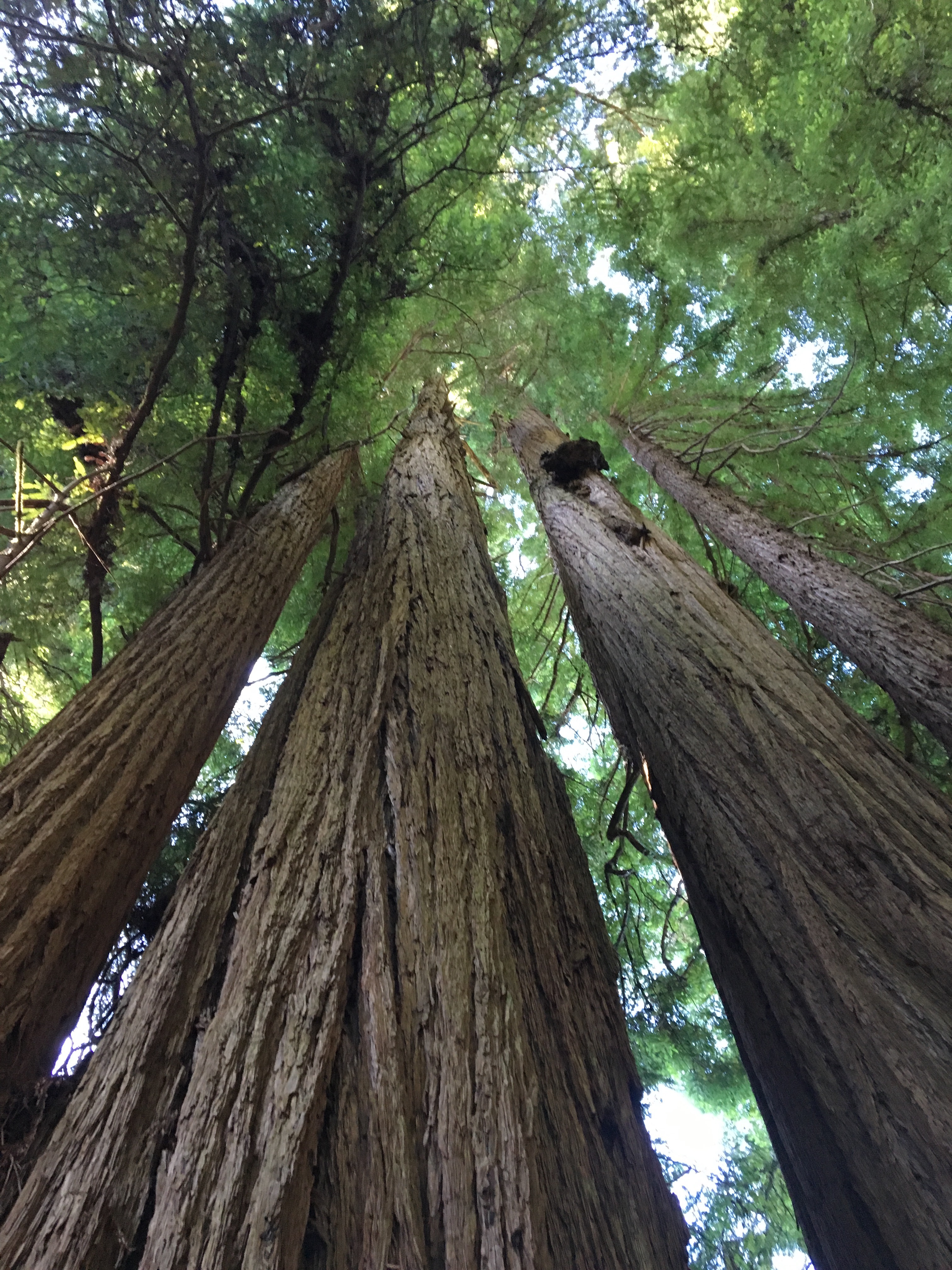
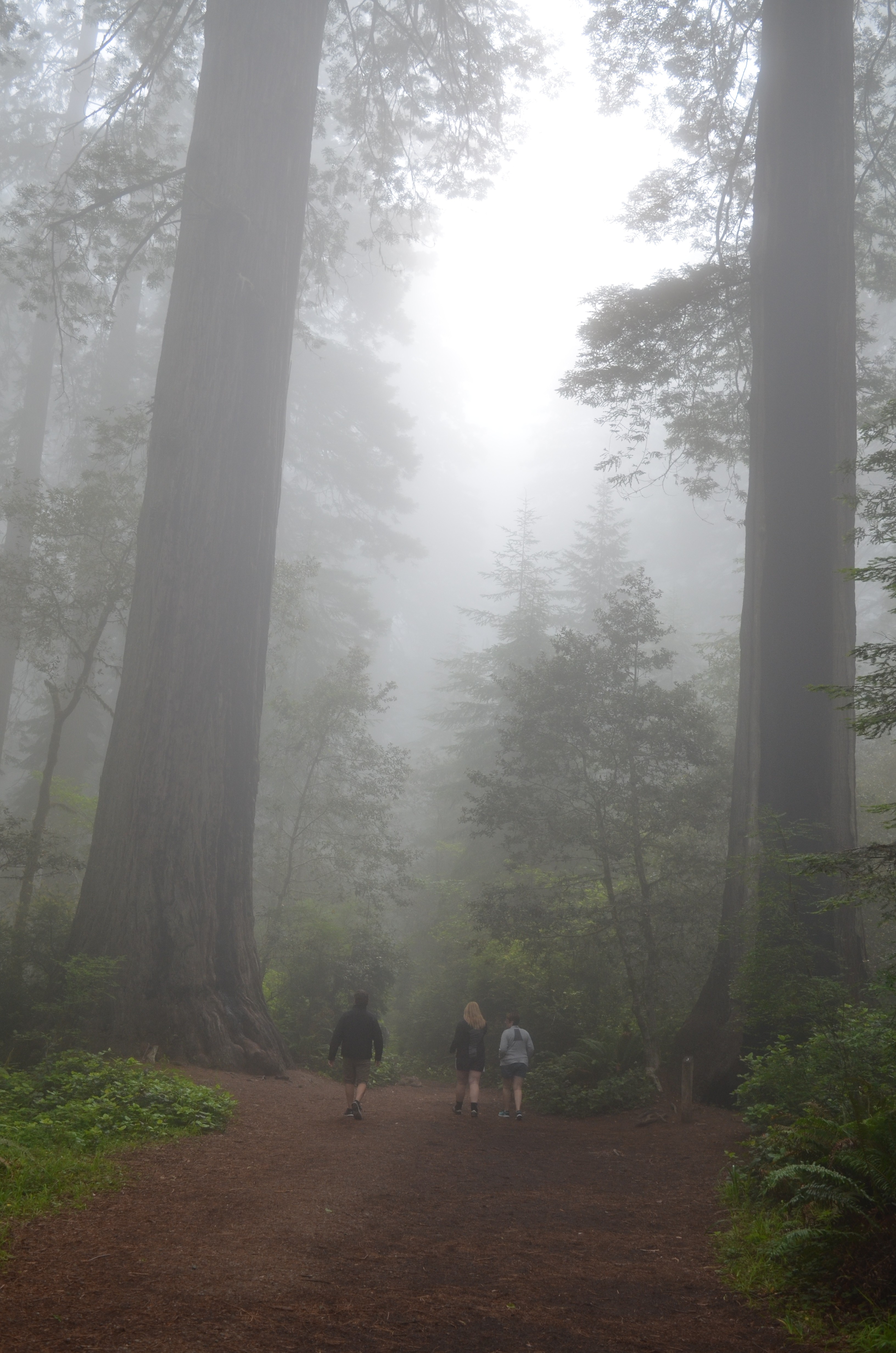
If you visit Northern California, there’s one natural feature that literally stands out-the big trees! Specifically, the tall Coastal Redwoods, the world’s tallest living thing. As we drove north from San Francisco we took a short detour from California’s Scenic Highway 101, to enter the Avenue of the Giants, a 30-mile corridor of huge redwood trees, and our first introduction to these towering giants. Along this drive, and many more to come, you drive right past trees that are wider than your vehicle, and very close to the road! These redwoods are enormous! The trees can exceed heights of 370 feet tall-that’s 60 feet taller than the Statue of Liberty! The State of California, along with the National Park Service, has preserved many of these groves of redwoods in several state parks and Redwoods National Park.

20160622_095819_resized 20160621_180129_resized

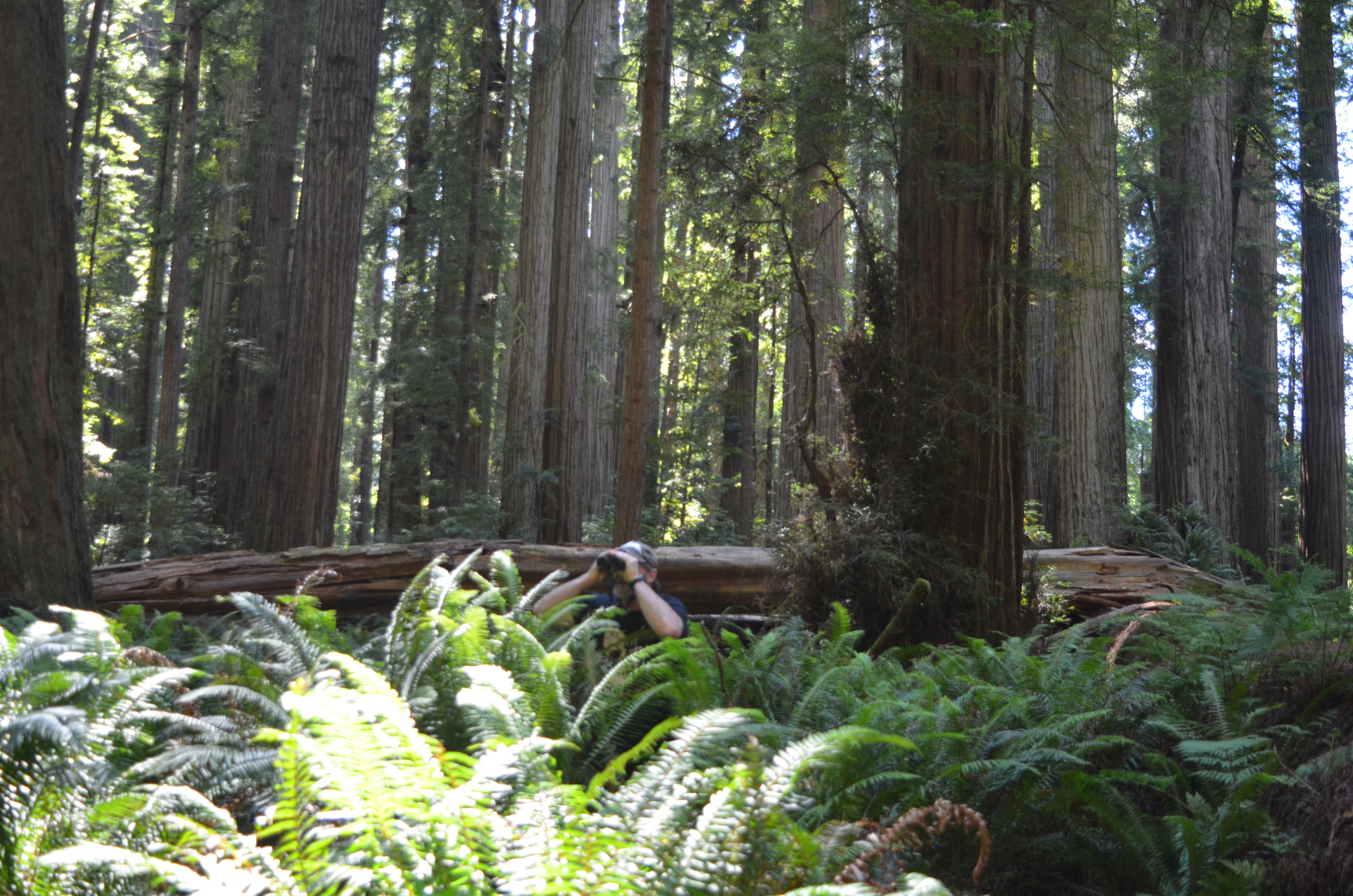
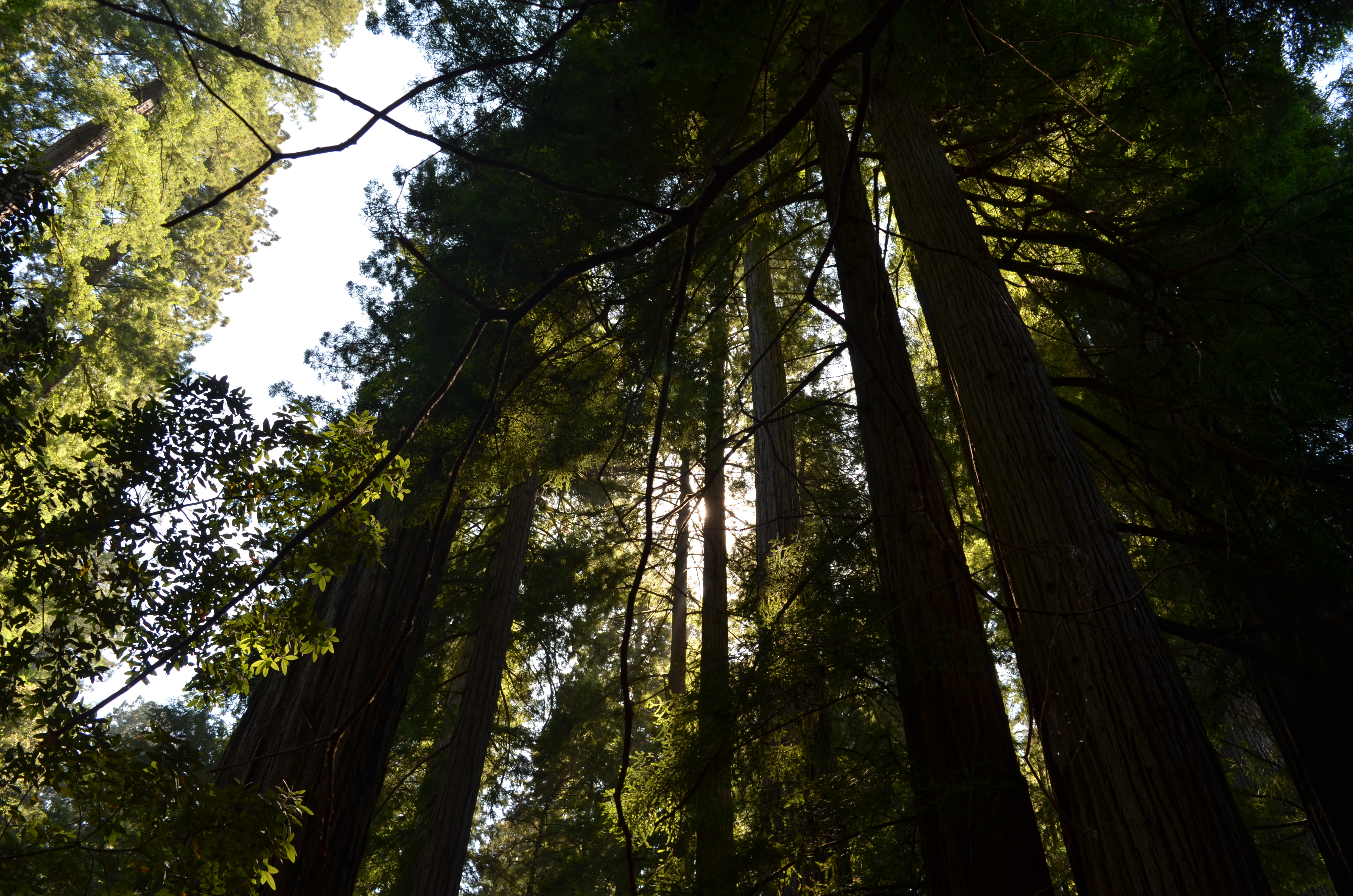
When you walk among these giants you can’t help but to stop and gaze up, tilting your head back to the point where your neck cramps up, trying to see the very top. I was so mesmerized at my first look at these tall trees that when I bent back to try and photograph the top, I stumbled backwards, fell on my butt and disappeared into a stand of ferns! I jumped up quickly to make sure Theresa (wife) and Darby (daughter) didn’t see me! But at the same time, the cool, shadows the canopy creates, along with ferns that grow 4 feet tall on the forest floor, keeps your eyes looking down as much as up. The landscape is almost fantasy-like. As a matter of fact, these redwood forests are so unique that scenes from many familiar movies have been filmed in them. Movies such as The Last of the Mohicans, Star Wars-Return of the Jedi (Ewok forest), The Lost World-Jurassic Park, and ET.

TallStand FoggyWalk 20160622_113413_resized

FernWatcher TallStand2

Looking for birds among the 4′ ferns

                                       20160621_182504_resized        BigCutTree

While we walked through these giant redwood forests, we were constantly amazed how lush these forests were. Tall trees with huge canopies that let in very little light, standing guard over dense beds of huge ferns, some growing almost as tall as us. We also took notice to how quiet these redwood forests were. We heard very few birds while hiking in the redwoods. Maybe we simply visited at the wrong time of the day, or maybe the birds were so high up in the canopy that we just couldn’t hear them singing! OK, maybe my hearing isn’t as acute as it once was, but it was still pretty quiet!

Our wildlife sightings in the dense redwood forests were limited to a few squirrels, a few Oregon Juncos that were down low, an occasional mouse/vole, and my favorite critter, the Banana Slug, which I told Tyler to find one for me. His comeback to my request was classic. “OK, I’ll keep my eyes peeled!”

BanSlug
Meet & Greet of my 1st Banana Slug

Overall, we visited three CA State Parks with outstanding Coastal Redwood groves, and Redwoods National Park, in a day and a half. We all agreed, we were only on day two of our adventure and we were already captivated by what we experienced. I highly recommend that if you have a chance to visit this area, or even San Francisco (4 ½ hrs south), get there! Go walk among the giants! You can’t see these trees anywhere else on Planet Earth.

StreamSelfie
Taking a lunch break selfie along the Smith River in Jedediah Smith Redwoods State Park in CA

Busy as a Beaver

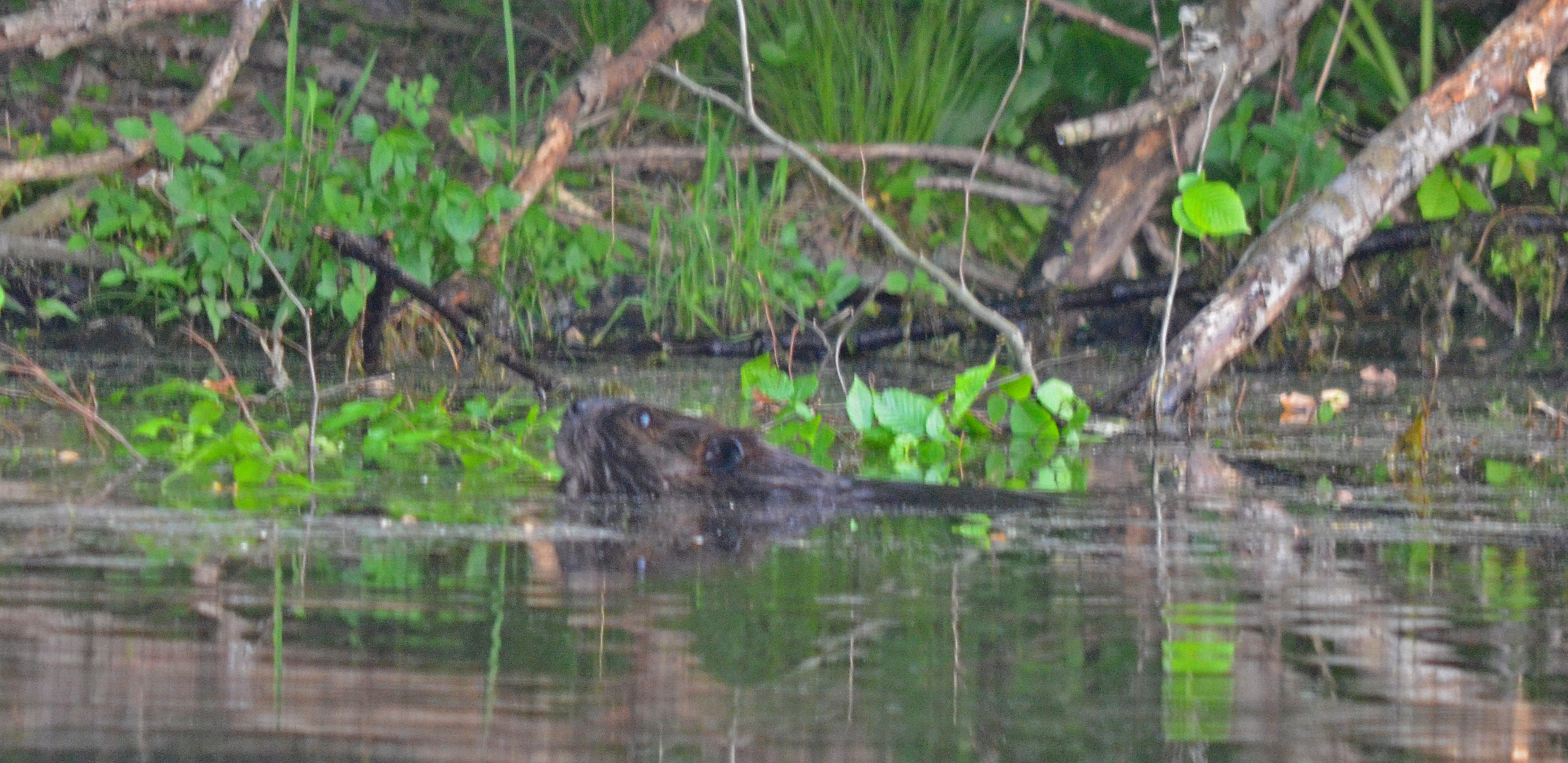
Darby and I took the boat out for short fishing trip to a local lake a couple weeks ago. As we quietly made our way to the far end of the lake, she discovered that we were not alone. Our mysterious “company” was not another boat, or angler, but a large, brown animal that was working on some tree branches at the shoreline. It was noisy as it gnawed the bark and leaves, while pulling the long, birch branch into the water. Maybe this was my Sasquatch I’ve been waiting to see for so many years! But as we drifted closer, it just didn’t seem large enough for a Sasquatch, unless it was laying down in the water, trying to hide! Nope, just another false Bigfoot sighting. The critter we discovered was a Beaver, and a big one at that!

beaver2
A Beaver pulls on some tree branches, as it prepares for supper.

 Beavers are aquatic mammals. They’re the largest rodents in North America, and are classified as furbearers. Adults may grow to 50 pounds are larger. Their fur is thick and they have a large, flat, leathery tail. The tail helps them to swim by propelling them through the water. It also helps balance them as they stand up. As my daughter and I discovered, they also use their tail as a warning, by slapping it loudly on the surface of the water to scare away any potential threats, like us, when we steered our boat too close to where the large critter was swimming. I’ve seen them do this many times in the past, so I warned Darby that the animal would probably do it. As it paddle towards us, I saw it start to arch its back, and I knew what was coming next. “Ker-Whack,” went the large, flat tail on the water surface, as the Beaver dove under. Darby almost dropped her iPhone overboard after being startled by the large rodent. Click below on “Tail Slappin” to  open a link to see/hear our close encounter with a Beaver!

                                                   Tail Slappin!

 Beavers prefer living in slow moving or still waters. Sometimes they have to create these “still waters” themselves, by damming up a small stream or creek. They do this by gnawing down small trees with two, long front teeth, and along with branches, sticks and mud, effectively pack it all together with their front feet. They’re nicknamed nature’s engineers. The new dam backs up the waterway, creating a pond where the animals will build their home, called a lodge. Due to their ability to back up the water, Beavers can completely change the habitat where the pond or wetlands have been formed. The flooded areas upstream of the dam may kill standing trees, and trap sediment that is swept downstream. These dead trees may become homes to cavity nesting birds, and the blocked sediment will grow new types of plants. An entire ecosystem transformed simply because a Beaver built a dam on a small creek.

 Beavers are herbivores. They not only gnaw down trees for their dam-building needs, but also feed on the bark and leaves of the branches after the tree falls. They’re constantly cutting and moving branches to maintain their dam and lodge, and to store food underwater for the long winter. Beavers don’t have many predators, but occasionally may be preyed on by bears, bobcat or coyotes.

beaver

 Before Europeans settled this country, Beavers were plentiful from the Arctic to Mexico. As pioneers arrived and began trapping them for their thick fur to make top hats and other specialty clothing, the prices for the pelts began to increase quickly. The demand for more and more furs spurred westward expansion into a new America. For some of us, we may be living in this country because our forefathers came looking for Beavers! However, because of its popularity, and uncontrolled trapping, the Beaver was wiped-out from PA and many other states by the late 1800s. Today, their population has rebounded, and due to proper wildlife management, Beavers are once again thriving throughout the Keystone State.

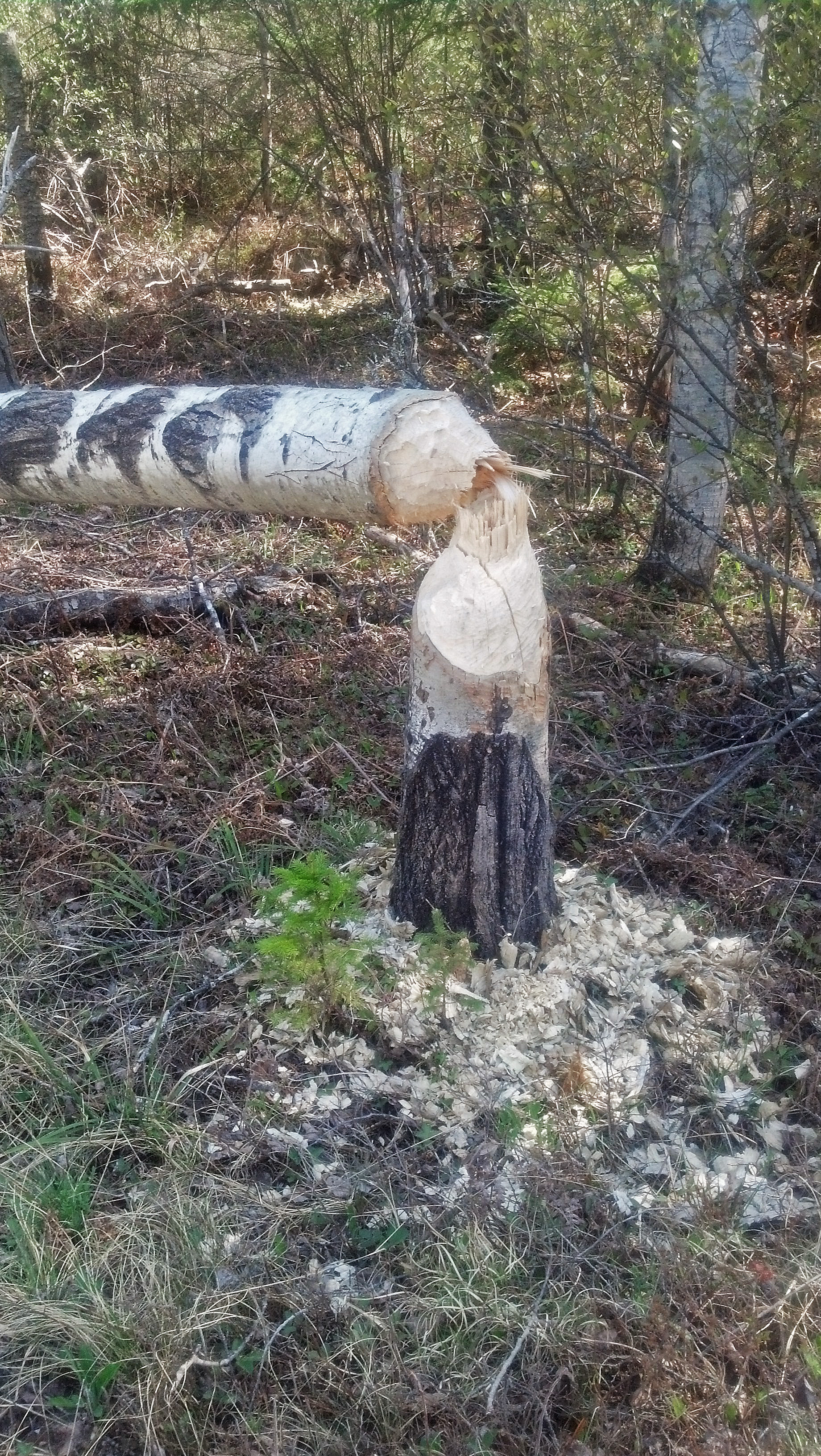
beavertree
A freshly gnawed-down beaver tree

 We still get excited when we see a Beaver, and can’t help to marvel at its tree-cutting and engineering skills, and most of all, its never-ending work ethic. But, we’ve also learned to keep our distance when that tail starts slapping the water!


Treasured Waters

June is National Rivers Month, including our own Pennsylvania Rivers Month. I love rivers! Who wouldn’t? They’re a critical natural resource, an important part of our history and the life blood of who we are. Since humans inhabited this planet, we have migrated toward the water, especially rivers. Entire civilizations were created near rivers, and many of our world’s largest cities were built along them. Today, these same cities rely on them for drinking water, commerce, energy, food and recreation. Unfortunately, unless you make a living directly from a local river, you may be disconnected to these precious natural waterways. That’s part of the goal of this month long celebration. A time to discover (or re-discover), the significance, value, beauty and just pure fun, the role that rivers play in our daily lives, and just as important, how vital they are in our ecosystem.

                              LehighGapFall     reflect2

Many of us cross rivers every day, to and from work or school, but only glance at them from above. But, in reality, they’re more than just something we drive over-they are life! What affects them, positive or negative, affects us. Their health and wealth, is our health and wealth. Their beauty is our beauty. Their sustainability, is our sustainability! They connect us to our communities and different cultures, they link us to our past and hopefully our future, and of course, rivers connect people to the natural environment.

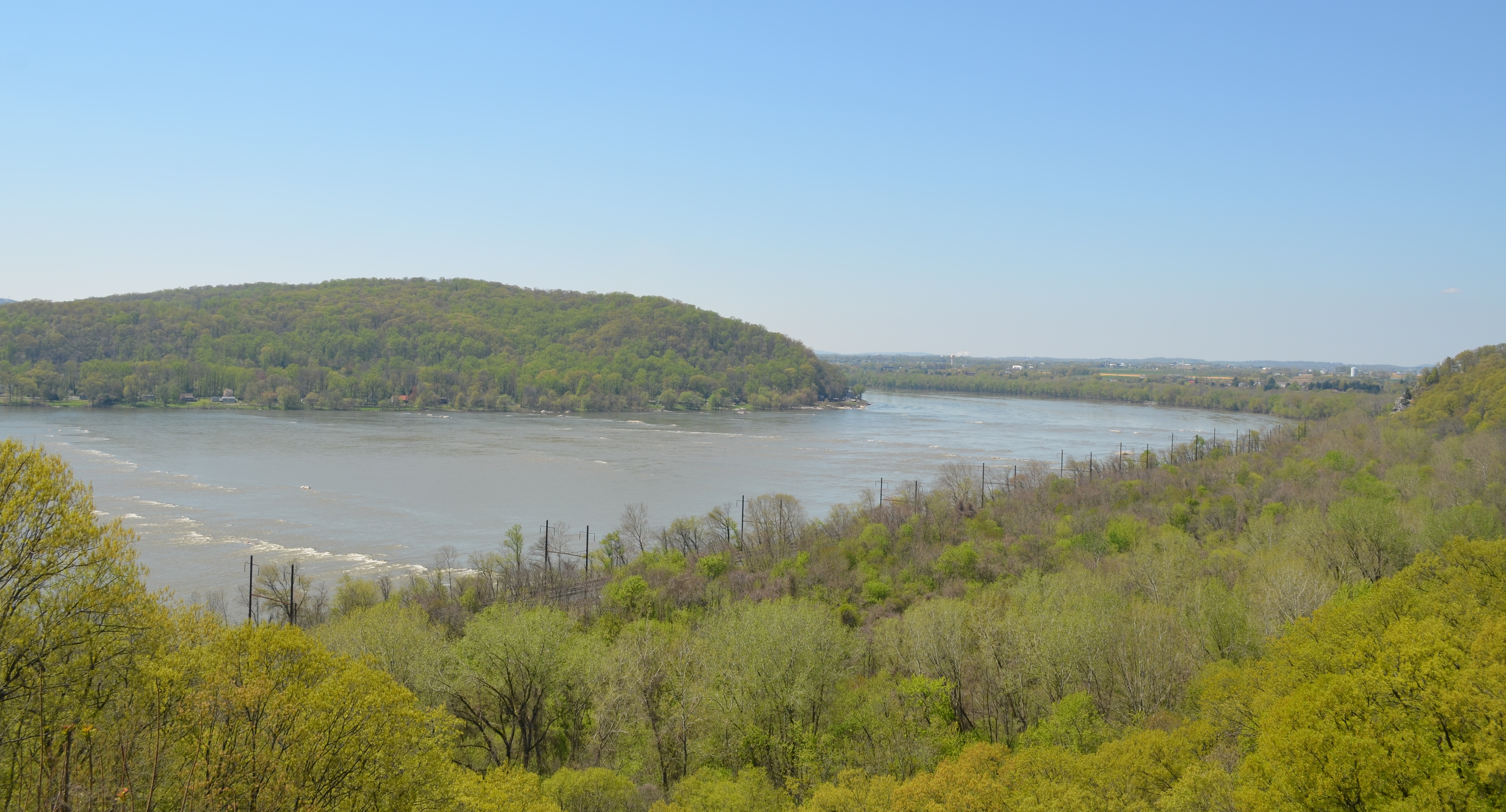
ChickiesSusqeha
The Susquehanna River at Columbia, PA. The Susquehanna is the largest source of freshwater to the Chesapeake Bay

Pennsylvania is blessed with some of the most beautiful and historic rivers in the U.S., including the Ohio, Allegheny, Susquehanna, Lehigh and Delaware. Although I grew up only a few miles from the North Branch Susquehanna, it was the Delaware River where my family and I spent most of our time-specifically the Upper Delaware, in the very northeast corner of Pennsylvania. This is where our dad grew up, and where he introduced all of us to this very special waterway. In this area, the river is part of the Upper Delaware National & Scenic Recreation Area, managed by the National Park Service. The Upper Delaware is a unique, natural place, where, over millions of years, its waters have carved a course through forested mountains of what is now Pennsylvania and New York.

OLYMPUS DIGITAL CAMERA
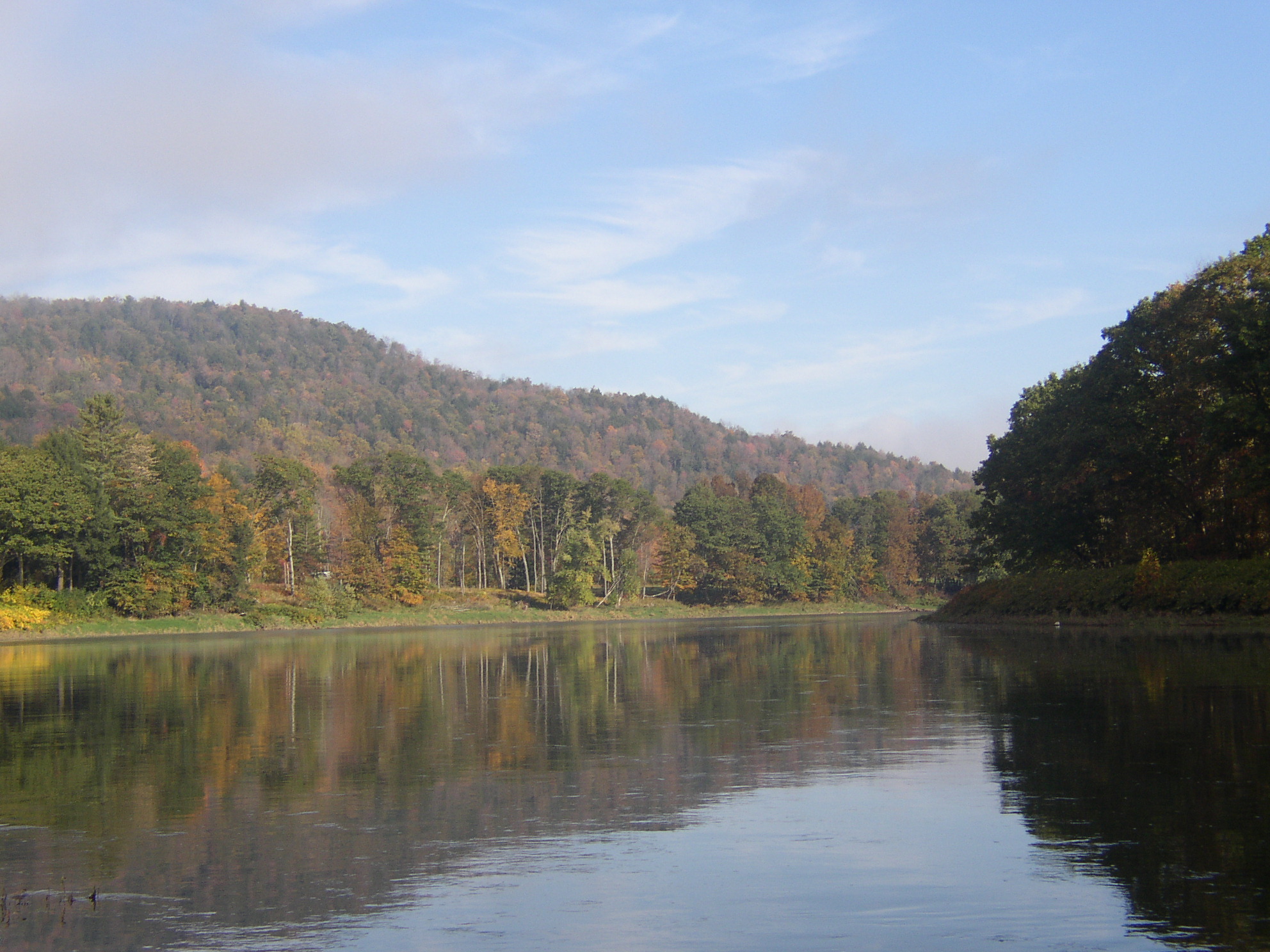
The Upper Delaware River

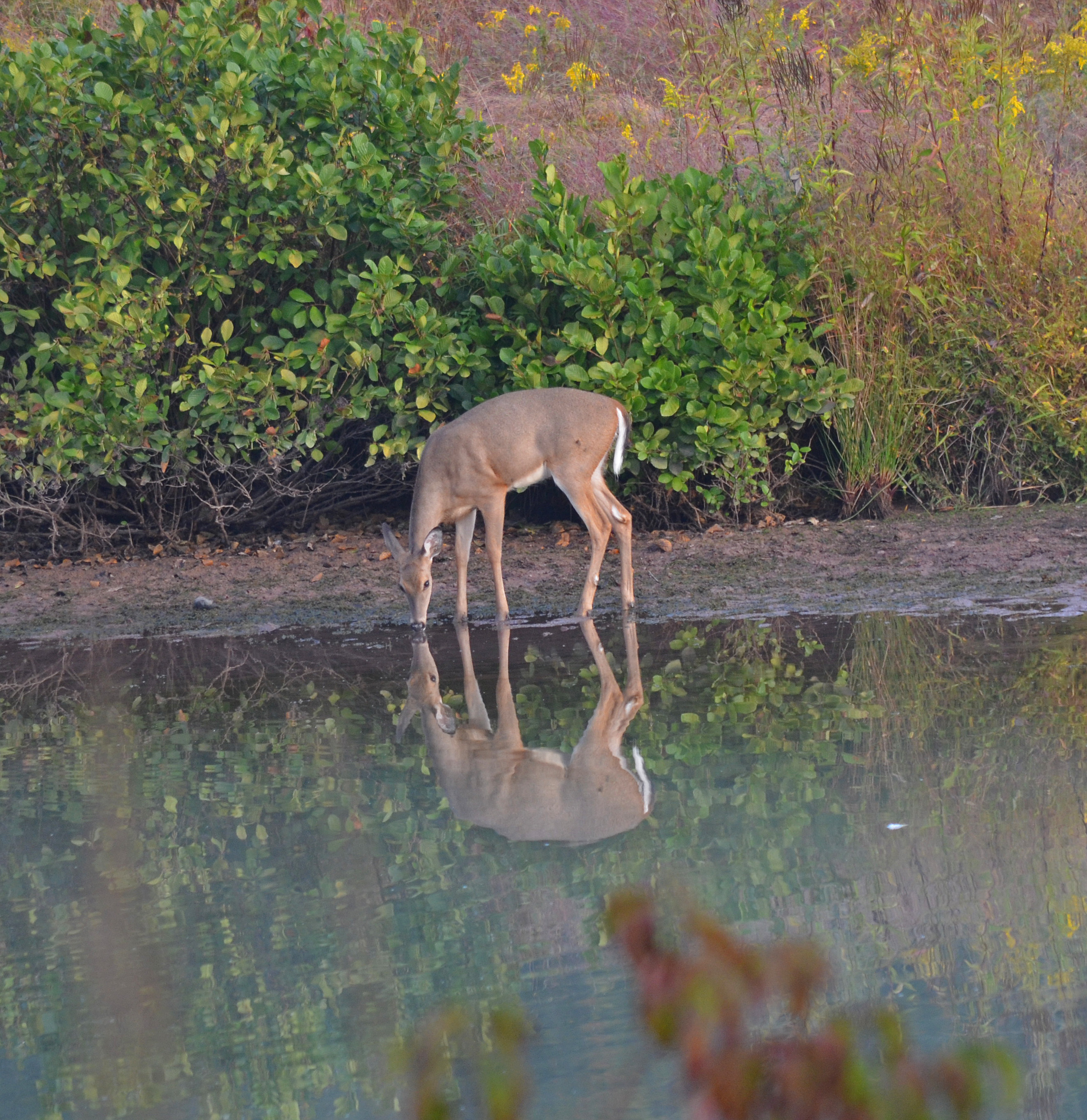
The Delaware’s clear, cool waters seem to call to you, inviting visitors to cast a fishing line for an unsuspecting trout or bass. Its lazy currents and long pools host canoers, kayakers and anything else that floats. We’ve spent many leisurely afternoons gently drifting on our tubes and rafts under the warm summer sun, gazing up at the mountains, while Bald Eagles soar by and White-tailed deer wade into the shallows for a quick drink.  reflect


We laugh, we joke and tell the same goofy stories over and over again of our childhood adventures on the river. When you get hot, you flip out and take a swim. If you get cold, you plop back on your tube and soak in the sun. This alternating pattern of floating and swimming can last for several calming hours. The only thing that can alter this river-relaxing plan may be stretches of shallow water, where one learns to pull up your bottom to avoid taking a direct hit. If carried out correctly, you can master the “bump and spin” technique of charting a course through the many river rocks! On just one 3-hour float trip, the Upper Delaware River can cleanse your mind, body and soul! But we have a river right here in our own backyard that offers the same benefits, with a much more storied past-the Schuylkill River.

The name “Schuylkill” comes from early Dutch settlers and means “hidden river.” It starts (headwaters) in the coal region of Schuylkill County and continues southeast where it meets the Delaware River in Philadelphia, a total distance of about 135 miles. The Schuylkill River watershed drains portions of eleven counties and covers an area of approximately 1,900 square miles. The watershed is home to over 3 million people and serves as a major source of drinking water.

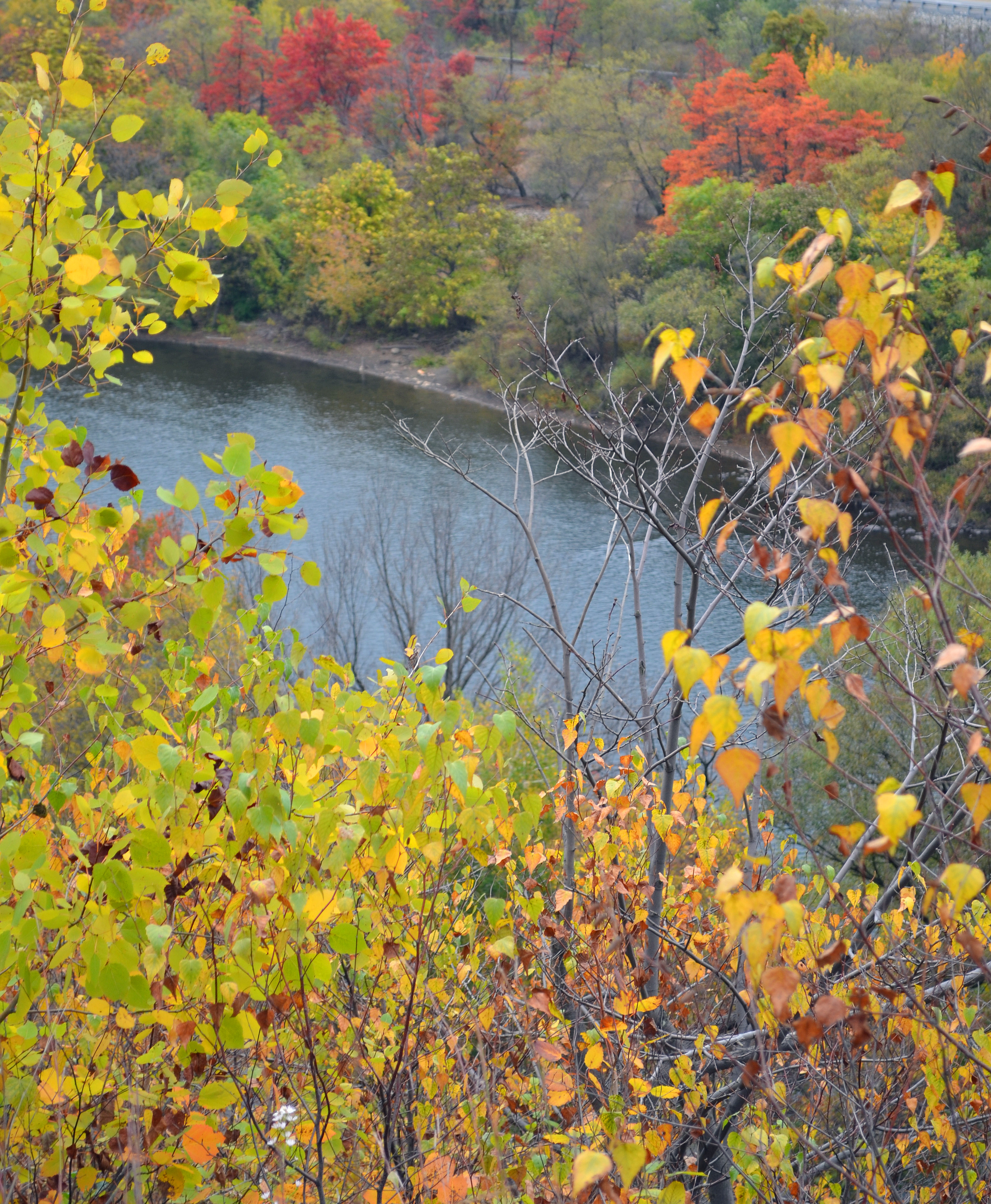
SRiverFall
Fall Foliage along the Schuylkill River

For over 200 years, the river and its adjacent valley has been a major transportation corridor. Along with the river, the Schuylkill Canal and the Reading and Pennsylvania Railroads all played important roles in the settlement of SE PA, and the industrial revolution. The river’s journey from Schuylkill County to Philadelphia is marked with some of the most famous pieces of our country’s past. From the anthracite coal regions of the north, to the steel mills dotted along its’ banks. From the rolling hills of Valley Forge National Historical Park where General George Washington and his Continental Army camped during the winter of 1777-1778, to Independence Hall and the Liberty Bell. The course of the Schuylkill River is a living voyage through America’s history, and a key resource to our future.

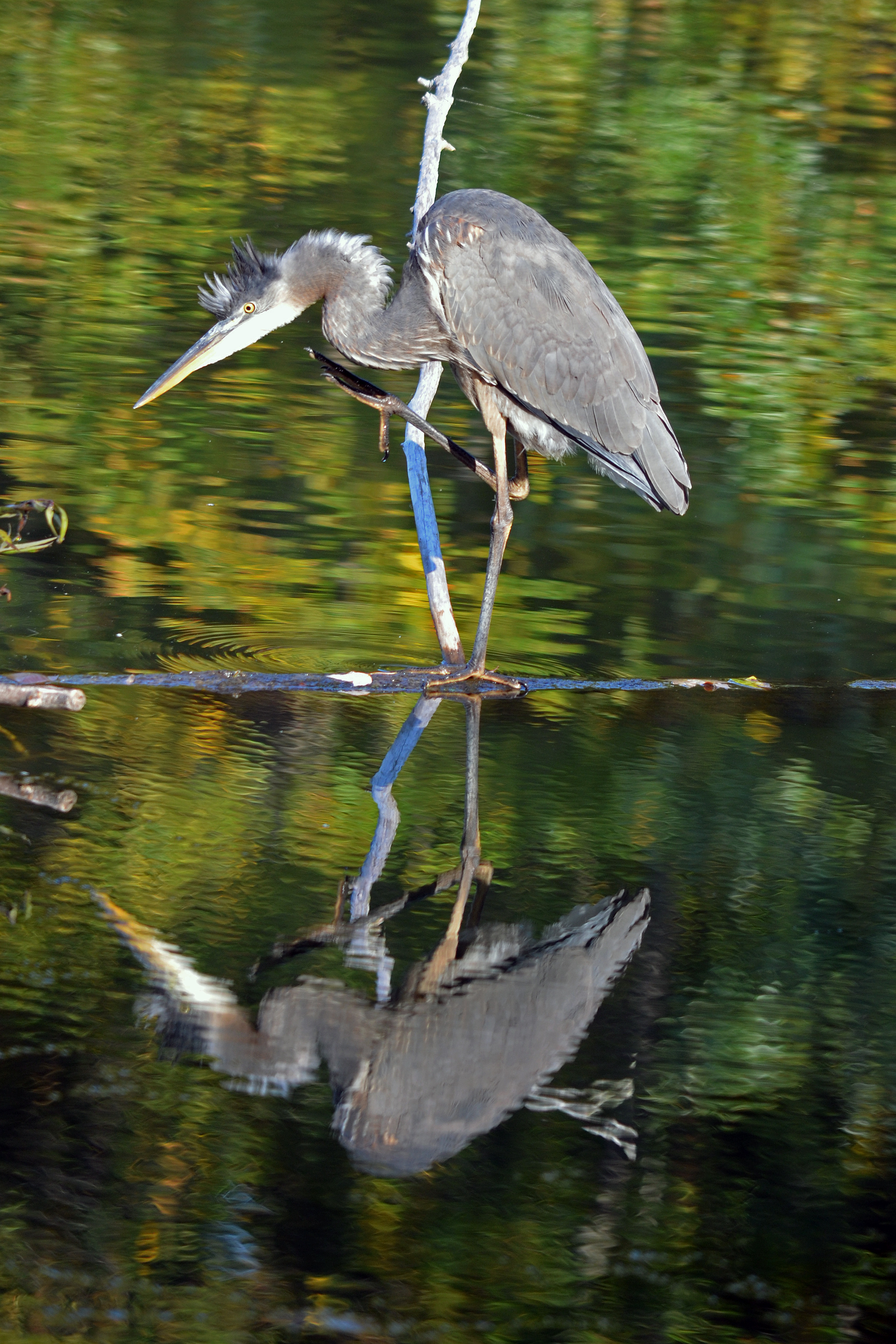
Today, the Schuylkill River serves in many different ways than it did centuries ago. After decades of industrial pollution choked its’ waters, the “Schuylkill” has made a fantastic environmental comeback thanks to new laws, stronger regulations and the efforts of many people who live and work here every day! Now, residents and visitors alike can enjoy its’ meandering currents to fish for bass, canoe or kayak or simply enjoy catching a glimpse of a Great-blue Heron quietly wading in the shallows.

Like thousands of other rivers around the world, the Schuylkill is an important natural resource worth protecting. We have an obligation to conserve these rivers for the heritage of our past, and for future generations. June is Rivers Month in Pennsylvania, and a great time to get out and enjoy our treasured waters!

Happy Snappers

“Go ahead, I dare you,” my brother Jimmy snickered to me. “It won’t hurt you,” he said staring at the gnarly-looking beast from the deep, which had just crawled out of the lake. It was at that exact moment when the ticked off reptile flung its large head and ferocious jaws at my hand, just missing my little finger! However, it did manage to SNAP the one inch stick I was holding, in half, like a thin toothpick. Jimmy just stood there laughing, as if he was trying to demonstrate a hard, nature lesson, from a tricky older brother, to a defenseless baby brother! OK, I got it, just like you assured me six months earlier that the old wire fence around that overgrown pasture was not electric!

OLYMPUS DIGITAL CAMERA

The “beast’ is a common critter in Pennsylvania, but mysterious. Most of the time it stays hidden underwater, in a lake, pond or slow-moving river. It’s a prehistoric animal, having been swimming and crawling on earth for millions of years. What it lacks in teeth, it easily makes up for with a sharp beak and very powerful jaws. The creature from under the surface is a Common Snapping Turtle, one of two species of snapping turtles that live in the U.S. The other is an Alligator Snapping Turtle, an even bigger and scarier reptilian monster that lives in the southern states.

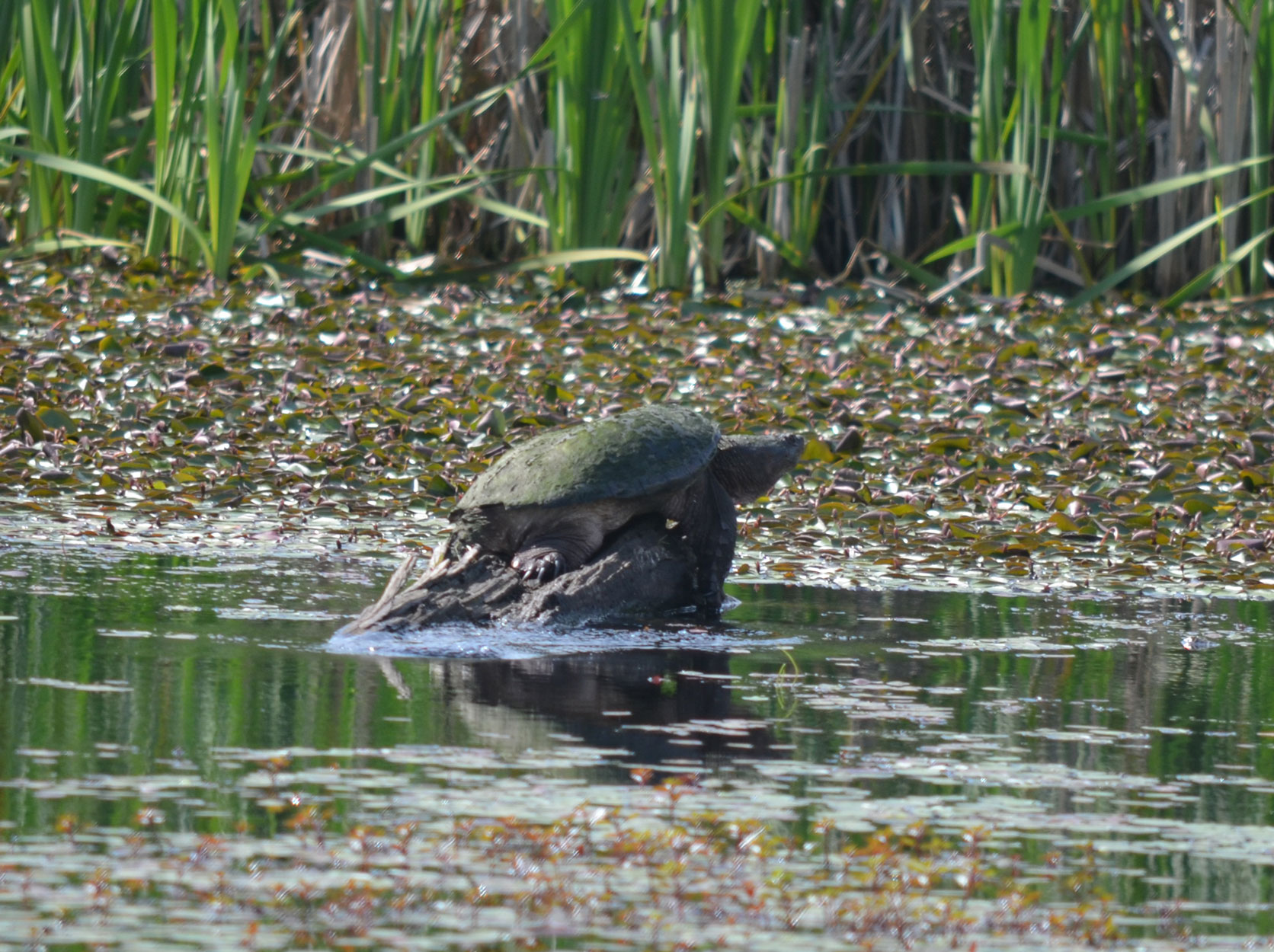
DSC_0054 basking2 Common Snapping Turtles can weigh up to 40 pounds and some may exceed 50 pounds. Snappers, as they’re commonly called, prefer still or slow-moving freshwater. They like muddy or sandy bottoms with a lot of vegetation. They’re opportunistic feeders, eating a variety of things, including vegetation, dead fish, worms, crayfish, frogs and anything else they want. They spend most of their time laying on the bottom of a pond or lake or floating just below the surface with just their eyes and nose sticking out of the water. On many occasions, I’ve been out fishing in my boat when I glanced over to see a dark, creepy snout with beady little eyes staring back at me. As I try to move closer for a better look, the eerie-looking object quietly disappears into the dark water. These animals are shy and reclusive in the water, usually fleeing when humans approach. But when they are on land (usually females seeking to lay eggs), they have a low tolerance for humans, or other animals, if approached. They have the ability to extend their neck and head out a long way, and quickly-like a snake striking its prey. Even their scientific name, serpentina, means “snake-like.” If you’re within their range, those powerful jaws and sharp beak can inflict a serious injury!

babysnapper
A baby snapper is smaller than a quarter

Contrary to popular belief, Snapping turtles are beneficial to our environment. They are efficient scavengers in nature, eating a lot of dead and decomposing animals. Females will leave the water in May and June to find a suitable nesting location (sandy or loose dirt, mulch, leaf litter) where they’ll dig a burrow and lay as many as 50 eggs. Baby snappers will hatch in about 2-3 months, depending on the temperature. Then, if they were lucky enough to hatch, they will attempt to crawl back to the water to live their life, if not eaten by predators such as raccoons, fox or crows, or get run over by a car trying to cross a road. If they make it back to the water, a Snapping turtle can live in the wild for 25 years or more.

snappers10
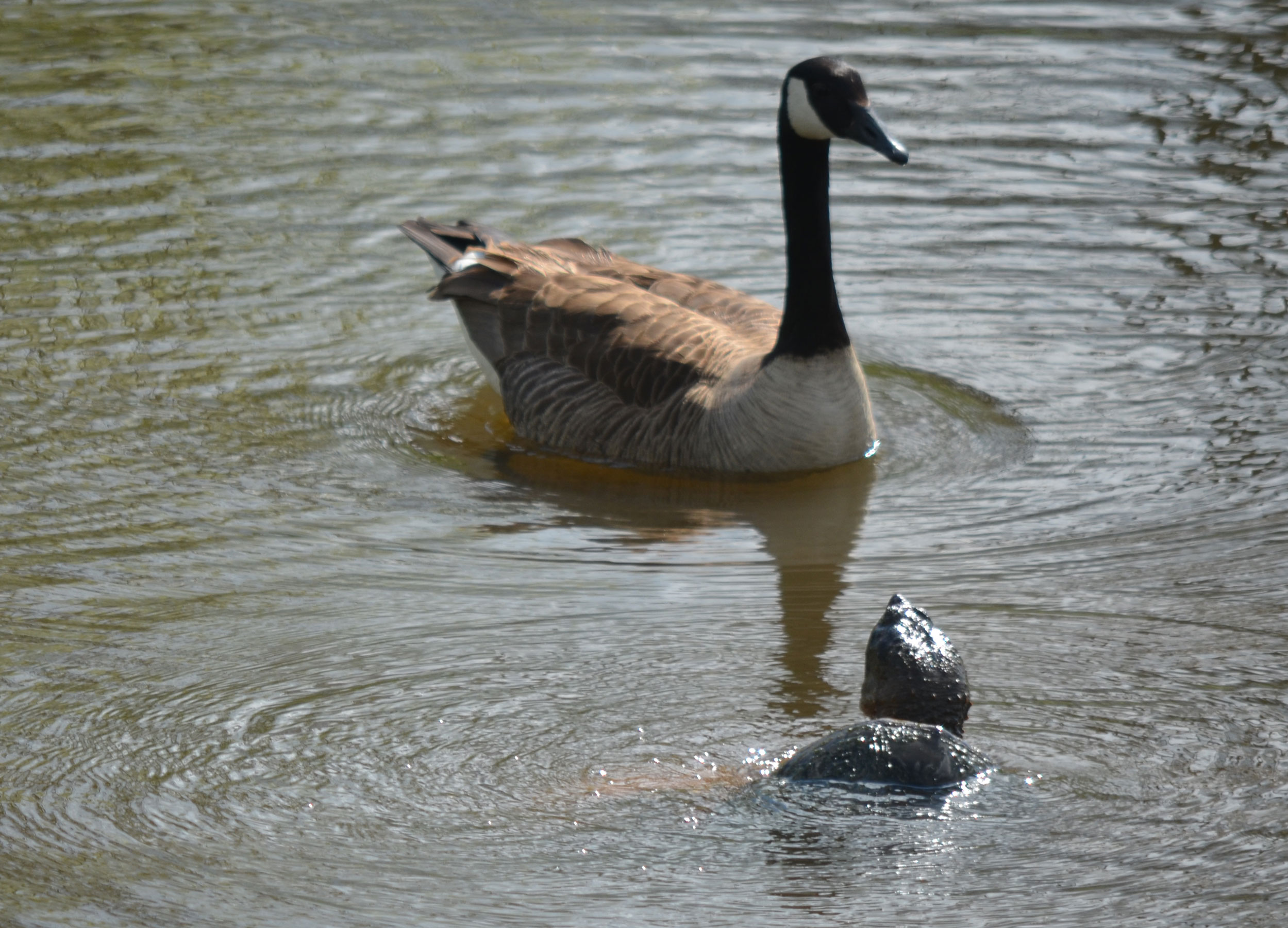
A large, male snapping turtle warns a Canada Goose to keep its distance!

Snapping turtles certainly can live up to their name, but these animals play a valuable part in nature and are important part of the food chain. But, one word of caution, “stop” before you stick your hand near that head and powerful set of jaws-especially if you have a big brother watching with a smirk on his face!

More Trees Please

As we walked through the shadowy forest, beams of sunlight flickered through the leaves and branches of the large oaks, maples and hickories. Young seedlings and saplings were all around us, stretching upward, as if trying to grab each thin, ray of sunshine. A chorus of songbirds was letting us know they were above us, and you could even smell the old logs decomposing on the forest floor. We paused for a moment, stood silently, and took a deep breath. The trees were here, they’ve always been here, but I think we take them for granted, assuming they’ll always be here. This past Friday, April 29th was Arbor Day. It’s a day to remind us of trees-their beauty, their importance and the role they play in our lives and the natural world.

                    DSC_0558 FallColors4

Trees are one of our most precious natural resources. They have been growing on our planet for millions of years. In fact, without trees, and other green plants, humans couldn’t live. Besides all the other wonderful benefits (read on) we receive from trees, is the one we require for life-oxygen. A study from North Carolina State University found that one large tree can provide a day’s worth of oxygen for four people! Think about what a million trees can do! More than 20% of the world’s oxygen comes from the Amazon Rainforest. I kinda like breathing every day!

2013-12-10 036

Big trees and little trees, tall and small, they grow on every continent except Antarctica. Want a way to cool your home in the summer, block those cold, winter winds and increase your property value? Plant a tree! Need a little stress relief from your busy, fast-paced life? Plant a tree, or take a walk in a forest or woodlot. Need some fresh apples, oranges or almonds? Plant one of these species of trees and start growing your own food! Birds and other wildlife will also benefit from your tree-planting efforts, and nature has never produced a better filter either. Trees filter pollutants out of the air we breathe, and their roots improve water quality by slowing down storm water runoff, preventing soil erosion and trapping unwanted sediments. Should I continue? Are you starting to see the benefits that trees provide to us, and our environment? To encourage us even more, Arbor Day was created in 1872.

treepg10aSterling Morton and his wife moved from Detroit to the Nebraska Territory in 1854. One of the first things they did after arriving was to plant many trees, shrubs and flowers, as did many of the settlers coming from the east. Morton became the Secretary of Agriculture in Nebraska, and was so passionate about trees he proposed to set aside a day just for planting them, calling it “Arbor Day.” So, on April 10, 1872, with much support from the State Board and many new pioneers, over one million trees were planted in Nebraska in a single day!

                               OLYMPUS DIGITAL CAMERA  dw2

There are literally hundreds of products we get directly from trees. Everyone knows about lumber, furniture and many kinds of food, but did you know we also get certain medicines and cosmetics from wood/wood products. The tiny fibers of wood are called cellulose. Cellulose, and its byproducts, are used in things such as toothbrushes, cellophane, chewing gum, asphalt, paint, detergent, and many, many more. But no matter what we get from trees, or think we get from trees, our lives, and our planet, are better with lots and lots of trees.

                    SwampTour19 DSC_0163

One of the easiest and most important things we can do as adults, is to teach our kids and grandkids how “excellent” trees are! Take the time and plan a walk in the woods. Let them get up close and personal with a big tree. Have them look up, down and all around, and encourage them to discover other trees, and other forests! Introduce them to some great books about trees, like the timeless classics of Shel Silverstein’s The Giving Tree (Harper & Row, 1964), and The Lorax by Dr. Seuss (Random House, 1971). Last, and certainly not least, plant a tree or two with them. Get their hands dirty by planting some in your backyard, or as part of a conservation project in a local park, and come back year after year to visit your tree-because we all need More Trees Please! For more information about trees and tree planting check out the National Arbor Day Foundation (www.arborday.org). If you would like to check out my children’s photo-fact book, More Trees Please, it’s available through Amazon.com. Happy Arbor Day!


Every Day is Earth Day

On April 22, 1970, Gaylord Nelson, a U.S. Senator from Wisconsin, wanted to organize a nationwide rally that focused on Americans’ growing concerns about environmental issues. His goal was to bring enough attention to such issues as air and water pollution, pesticides, the loss of wild lands, and the extinction of species, into the political spotlight, that environmental protection would follow-and it did! That first Earth Day led to the creation of the U.S. Environmental Protection Agency (EPA) and the passage of some the most important environmental legislation in modern times, including the Clean Water Act, the Clean Air Act and the Endangered Species Act. Forty-six years later, we still celebrate Earth Day on April 22nd. The times may have changed, but the message remains the same. We all live on the same planet and still need clean water, clean air and a healthy, sustainable environment for ourselves and future generations. But what if we tried to “celebrate” everyday as Earth Day? How can we make a difference in our own lifestyles?

Aug2015a

                                            Earth Day was a key in creating the Clean Water Act

We may not be able to individually stop climate change, or save an endangered species in the rainforest, but we can do our part, and lots of “parts” adds up to a difference! There are many simple things we could do throughout our day that can contribute to becoming a good steward of our environment. Here are a few simple tips that we can all follow:

Energy Conservation-switch to Compact Fluorescent Lamps (CFL) for lighting instead of incandescent light bulbs; turn off lights in rooms you’re not using and use more natural light if possible; turn down the heat in your house before going to bed, and while away at work (or use a programmable thermostat); reduce your vehicle trips by carpooling with co-workers, neighbors, friends and family, and by walking more; run the dishwasher, washer and dryer only when you have full loads, turn off your computer at night, unplug your cell phone charger when not using it because it still uses energy when plugged in and plant a tree or two around your home, which can keep your home cooler in the summer and break some of the cold, winter winds

OLYMPUS DIGITAL CAMERA
Plant a tree, or two, or three!

Water Conservation-turn off the faucet while brushing your teeth, take shorter showers, install water saving shower/faucet heads, re-use water bottles rather than buying new ones all the time, limit watering your lawn, but if necessary, try to water early in the morning, plant native plants that require less water (Xeriscaping)

flowers2
Plant native plants that require less water, and if possible, convert some areas that you mow each week, to meadows


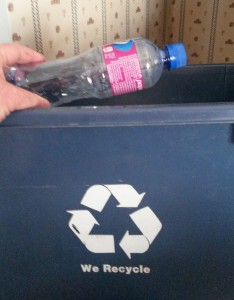
Recycling & Waste Reduction-bring your own re-useable shopping bags to the grocery store, recycle as many items as you can and try to buy recycled products, use less paper, pack a lunch in a re-useable lunch bag instead of buying lunch in disposable packaging, use a re-useable water bottle, compost yard waste, grass clippings and leaves


recycle

Biodiversity/Conservation-plant a tree, shrub or garden, eat more locally grown foods, use less, or no chemicals, on your lawn and in your garden, put up a bird feeder/bird house, volunteer at your local park, nature center, or wildlife preserve, participate in a local stream or beach cleanup

…….and the list goes on and on! There are so many little things we can do each day to help our environment; and by helping our environment, we help ourselves and our children. Don’t let April 22nd be the only day you celebrate the earth. Make Everyday Earth Day! For more information on available resources and what you can do, go to:   www.epa.gov/earthday


Beautiful Bufo

Don’t touch it, you’ll get warts,” my mother exclaimed as she took one step back. She tried her best to convince me that she was a trained toad-ologist before she became a mother. I was eight years old, but I knew better, so I ignored her pleas and continued touching the rough, brown bumps on top of its flat head. It was one of my favorites, the American toad.

Bufo
              American Toad-Beautiful Bufo 

The American toad (Bufo americanus) is an amphibian native to Pennsylvania. It is one of three native toads we have here in our state. Toads differ from frogs because they have dry, bumpy (“warty”) skin and shorter legs than frogs. Toads also have something else frogs don’t have, a pair of poison glands on the top of their backs called parotoid glands. These poison-filled sacs are used as a defense method against predators. If a hungry raccoon or opossum bites a toad, the nasty tasting poison will usually cause the animal to quickly spit it out, and most likely avoid the toad in the future. It’s because of these poison glands and the well-known myth that toads give you warts, that toads have been mentioned in history for hundreds of years!

Witches, warlocks, and wizards of all shapes and sizes would claim that a toad used in   magic potion could cast a spell on their enemy that they could never recover from. Others believed that drinking the mixed ashes of a toad in a thick, “tasty” liquid could make that person invisible. Even Shakespeare mentions these plain, bumpy hoppers in his famous play, Macbeth. Still, after many centuries of being marked as dark, ugly and as an ingredient in magical potions, toads have managed to live on, and prove their beneficial role in the natural environment.

In the flower beds around our home, the American toad is a welcome visitor! They eat many common pests such as slugs and beetles, so we’re always happy to see them hopping around the yard in the late spring, summer and fall. Similar to many other amphibians, toads return to water each spring to mate and lay eggs. The males arrive before the females and begin calling their long, drawn-out “trill.” The eggs are laid in long, jelly-like strings in a shallow pond, roadside ditch or local wetland. Although they may lay as many as 20,000 eggs, most do not survive to become adults. After hatching, the new larvae, called tadpoles, swim around their watery home for several weeks breathing through gills and eating algae. As the tadpoles change into adults (metamorphosis), they lose their gills and develop lungs to breathe. The young toads move up on land and begin their never-ending search for food. Their brown and gray color helps to camouflage them in the leaves of the forest floor, dry grassy meadow, or backyard garden. As the days grow shorter and temperatures begin to fall, the American toad seeks out a cozy spot to hibernate for the winter-ready to begin the entire cycle over again the following spring.
DSC_0036
A male and female America Toad having a “play date!”

amph2A week after playing with that toad and proudly showing my mother my new pet, I discovered a small, red welt on my hand. Just another “kid scratch” to me, but after close examination, my “amphibious field doctor mother” smirked, and said, “See I TOAD you so!” Good one Ma!

Sounds of Spring

Sounds of Spring

On our calendars here in Pennsylvania, spring arrives this Sunday, March 20th at 12:30 am. This is also known as the vernal equinox. However, I’ve been hearing spring for almost three weeks now. Nature is already in full swing with this changing season. With temperatures last week climbing to almost 80 degrees, I sometimes feel we move from winter directly into summer, with very little spring. By late February, I was already hearing the familiar call of the Red-winged blackbird coming from a small stand of cattails in the local wetlands. “Conk-a-deee, Conk-a-deee,” it seemed to say, over and over again, puffing out its bright, orange shoulder patches.

RWBB4

click here to hear the male Red-winged Blackbird calling from the cattails

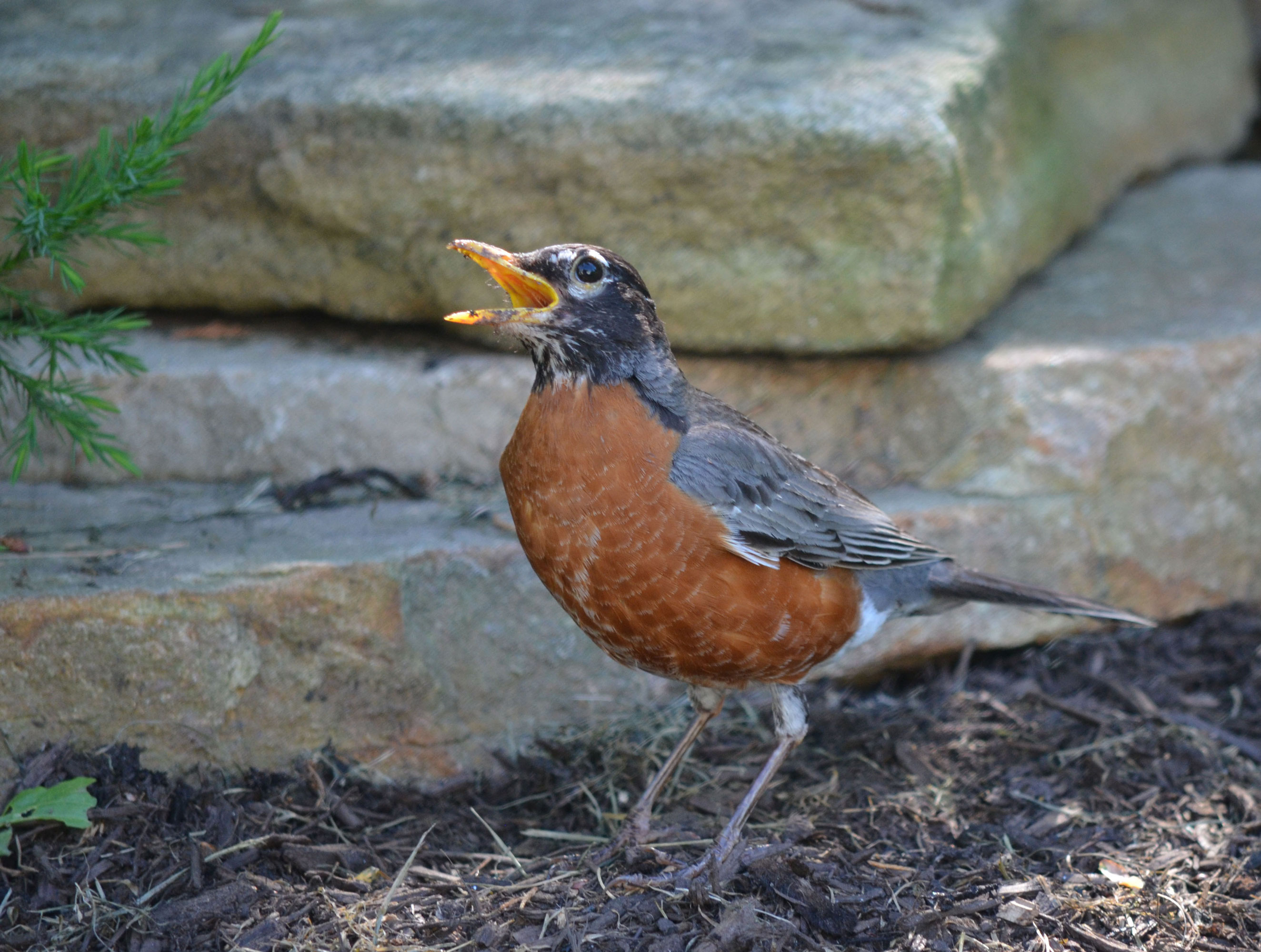
Even before I flipped the calendar, I was excited to hear several bird species (usually the males) singing and calling-establishing territories and preparing “to attract girlfriends.” In addition to the Red-wings, our neighborhood becomes a morning chorus of coos, chirps, warbles and calls from Cardinals, Mourning Doves, Tufted Titmice, and Carolina Chickadees. As I sip my coffee, a Carolina Wren and a Red-bellied woodpecker exclaim their nearby presence, and a small flock of American Crows holler loudly as they fly by. They all know it’s time! But many of you may be asking, “What about Robins?” Yes, it’s true, Robins are also considered one of those first harbingers of spring, especially when several of them drop down in your grassy backyard looking for a few worms at this time of the year. The males are also up at dawn singing loudly, and chasing each other from yard to yard. But many Robins have been around all winter, feeding on berries until the ground thaws.

JuvRobin

click here to hear the male American Robin singing

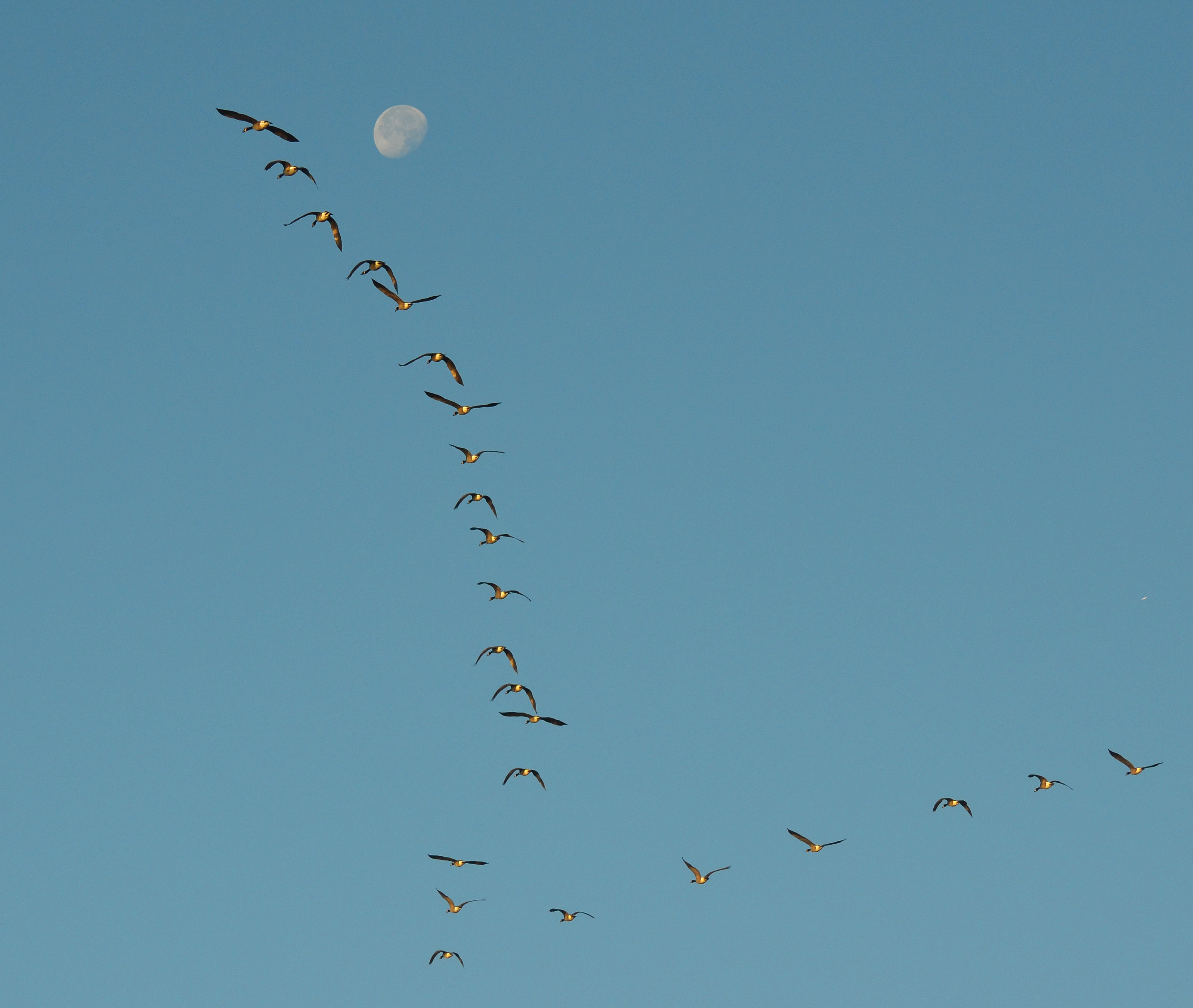
Look and listen overhead and you may also observe large flocks of Canada Geese or even Snow Geese, honking in their well-known V-formations, headed north to their Arctic breeding grounds. Nature begins to turn up the volume in March!

goosemoon

click here to hear the honks of migrating Canada Geese

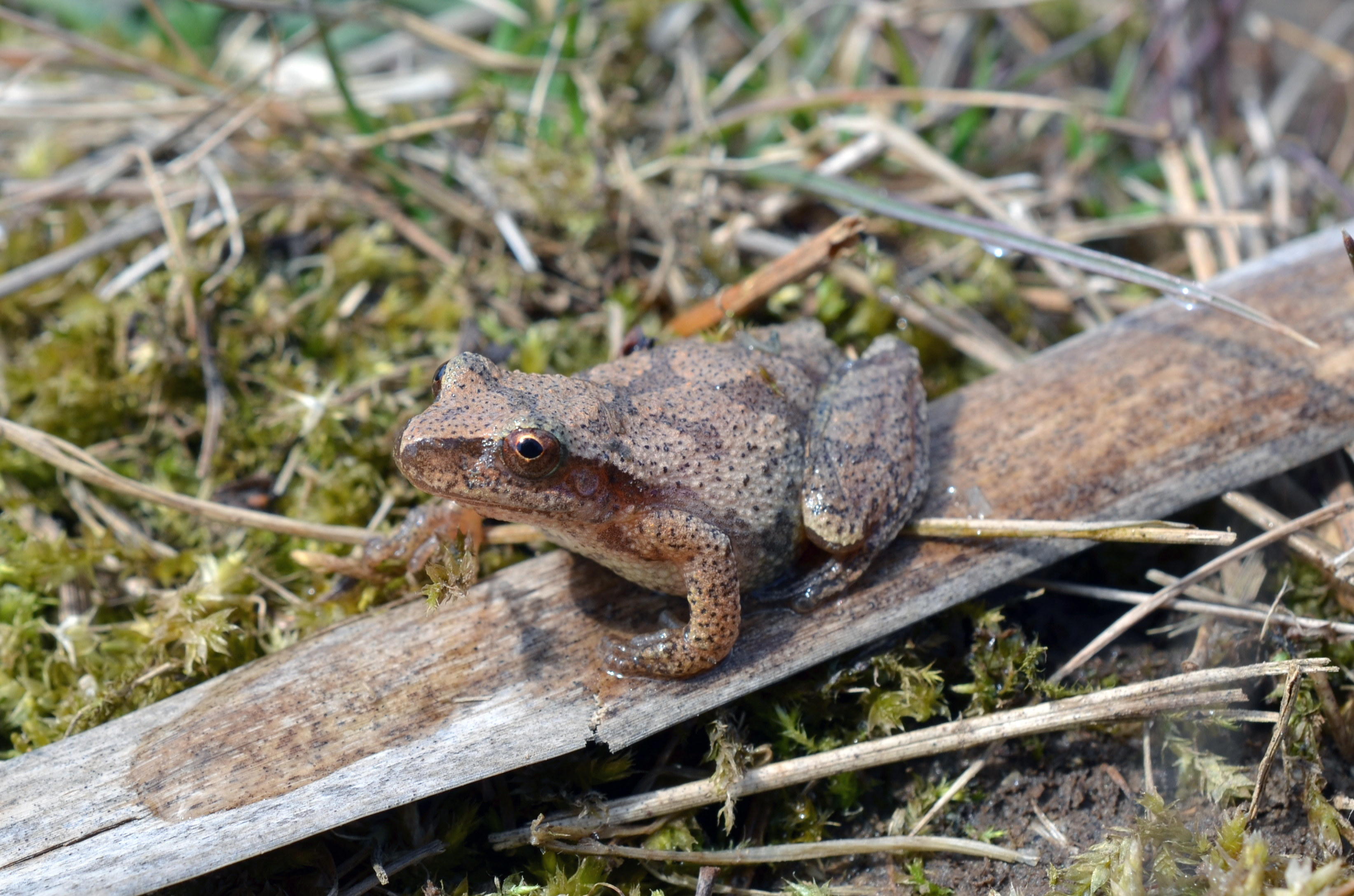
As the birds continue to “sing their hymns” overhead, some of the amphibians have been busy down below. The Spring peeper, a frog that’s only the size of the end of your thumb, calls its raucous, peeping call from the grasses of wet meadows and marshes. In many places, hundreds will call together, like a blaring, rock band repeating the only chord they know, over and over again! As you approach them to try and see where the sounds are coming from, they go suddenly go silent, so as to not give away their hiding spot.

SPeep1

click here to listen to the peeps of the Spring Peeper

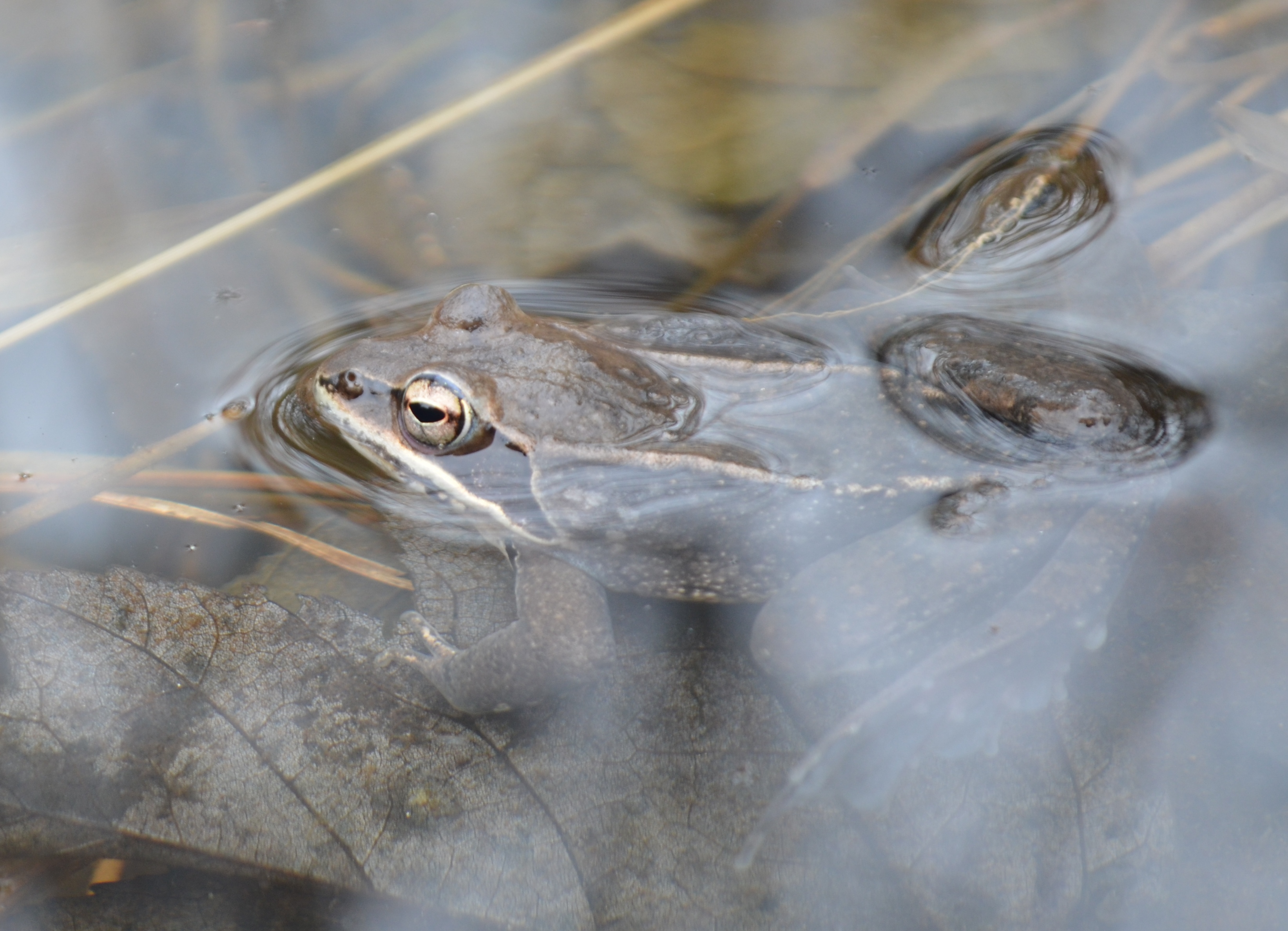
Wood frogs have also started their mating calls, and in fact, may have been calling while there was still leftover ice on many of the forested wetlands. These small, beautiful critters can be found in the forests of PA where vernal (seasonal) pools of water are formed each spring. But, different than the small peepers, their call may fool you if you’ve never heard it before, sounding much like quacking ducks. It tricked me the first time I wandered into their breeding area. This small, cool-looking frog with a black mask can be found throughout the U.S. They are the only frog that lives north of the Arctic Circle.

DSC_0010

click here to listen enjoy the “quacking” of a chorus of Wood Frogs

As March fades into April, another amphibian will begin its vocalizations-many times from the same pools of water the peepers and Wood frogs called from the month before-the American toad. This brown, “warty-looking” animal will sit in the sunshine of small waterways, wetlands and even drainage ditches, bellowing out its long, monotone trills as its throat inflates to look like a kid blowing a bubble from a wad of gum. It reminds me of my childhood!

amph2

click here to listen to the “bubblicious” sounds of the American Toad

There are all kinds of animals that begin audible communications when spring arrives. From our feathered friends, to the smallest frogs, and even mammals and insects, wildlife lets us know a new season is coming-not by what we see, but what we hear! Enjoy!

Touching the Sky

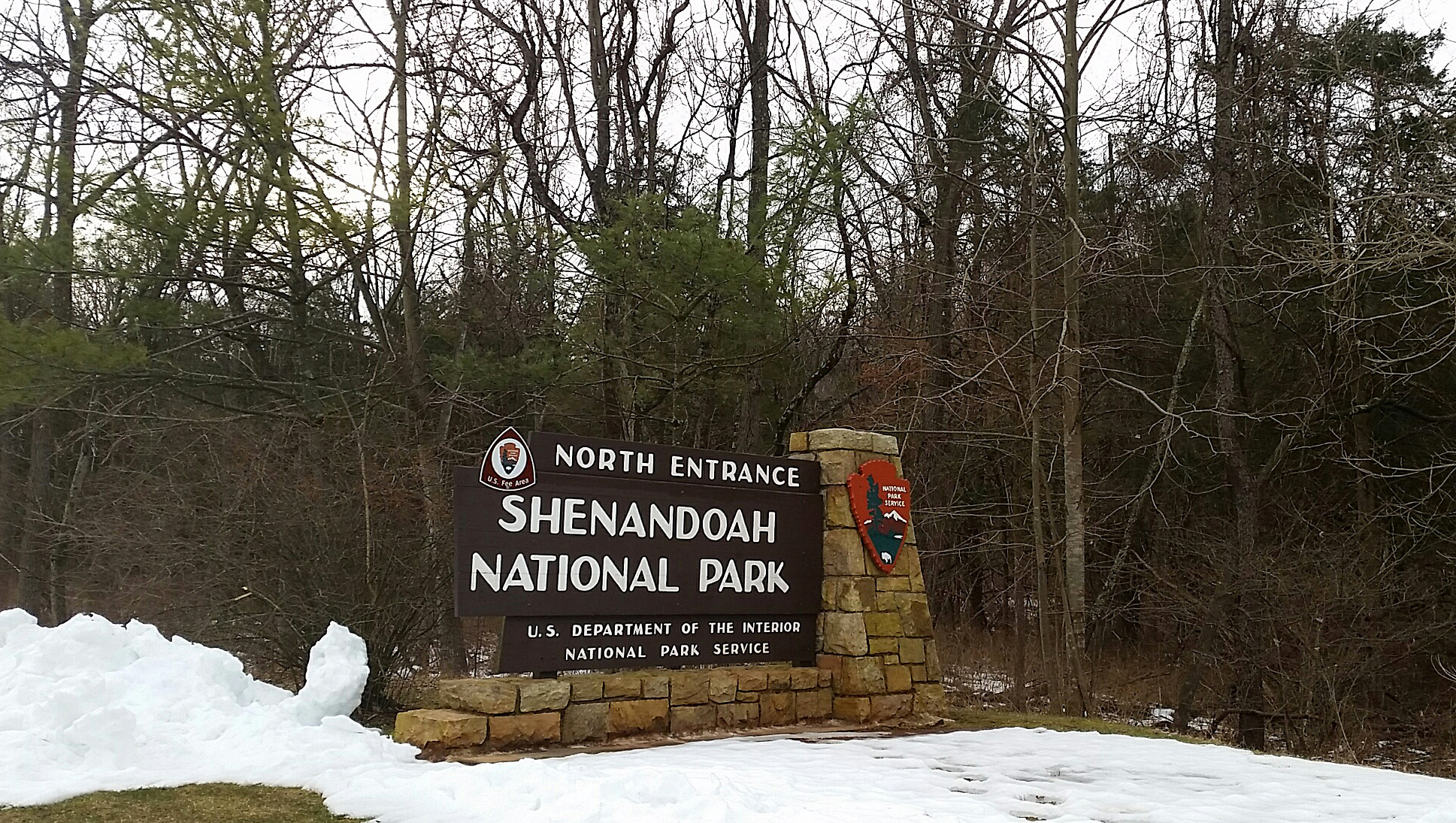
We drove to the sky the other day. It was a warm day for late February, and the gray clouds that surrounded us only allowed the sun to peek through every once in a while. The sky is a big thing, and I’m not sure where it actually starts or ends. Technically, by definition, the sky is the area above the earth where the clouds, sun and stars are. OK, so we didn’t actually drive to the sky, but it felt like we came close! SNPSign

BRSunrise
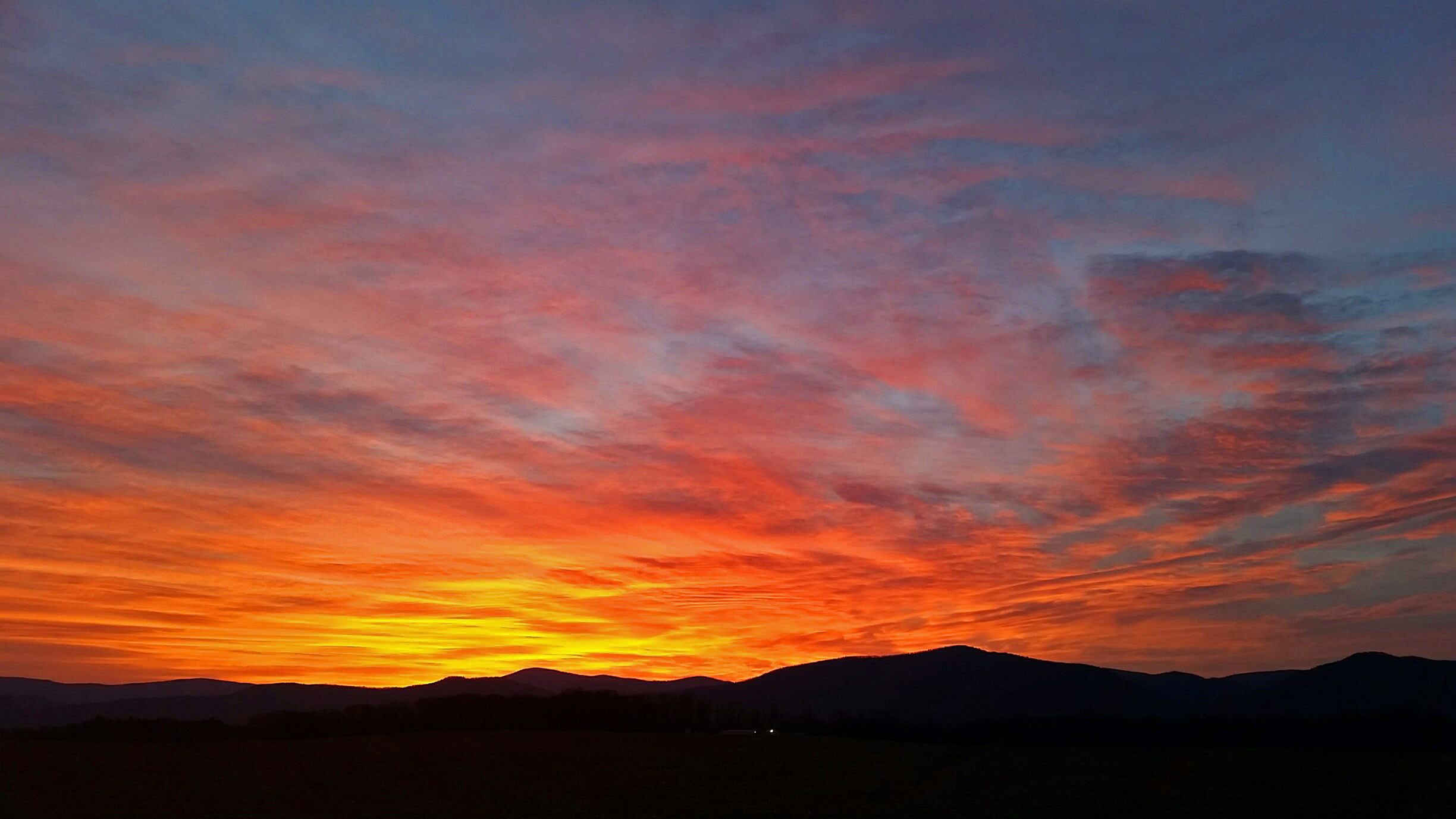
Sunrise over the Blue Ridge Mountains, VA

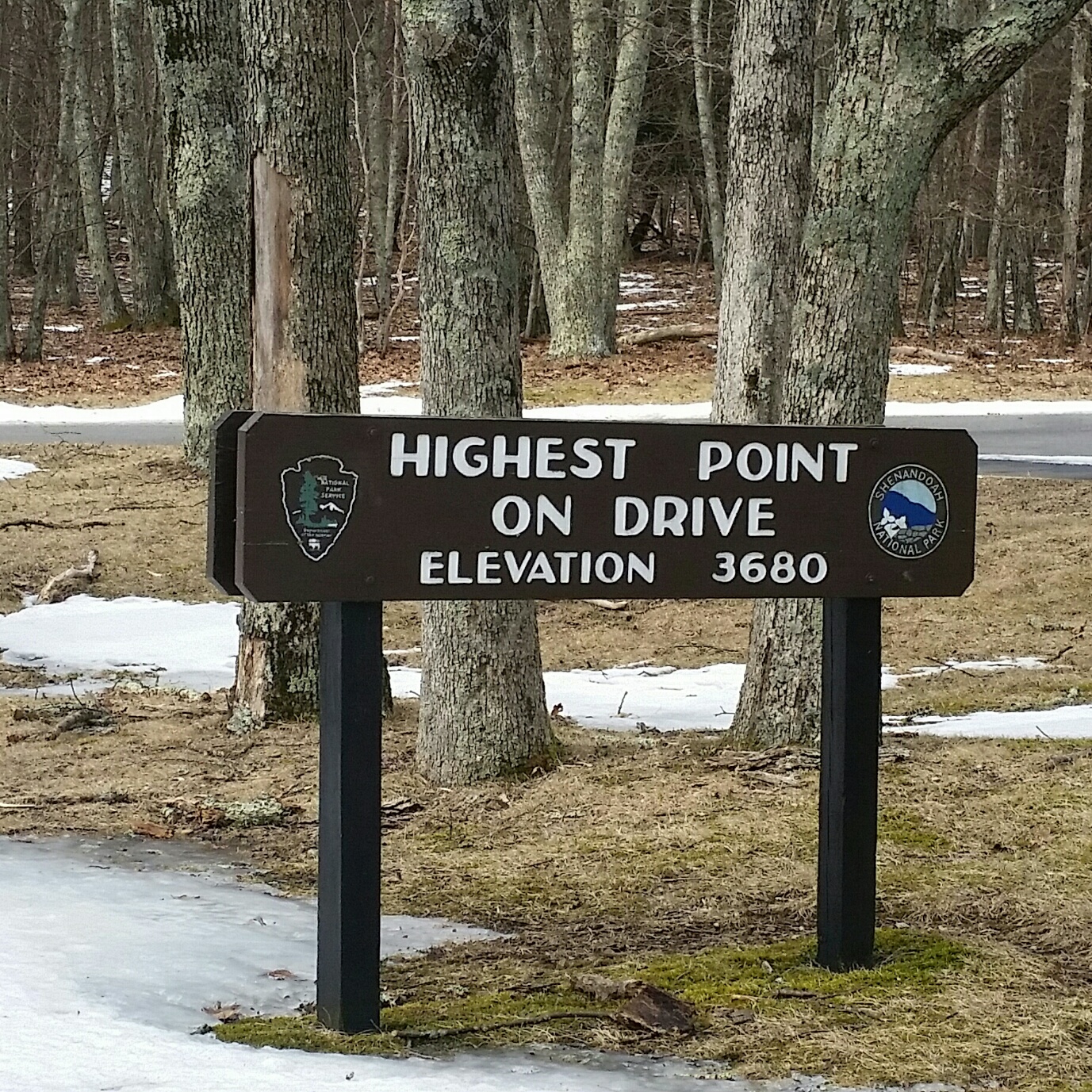
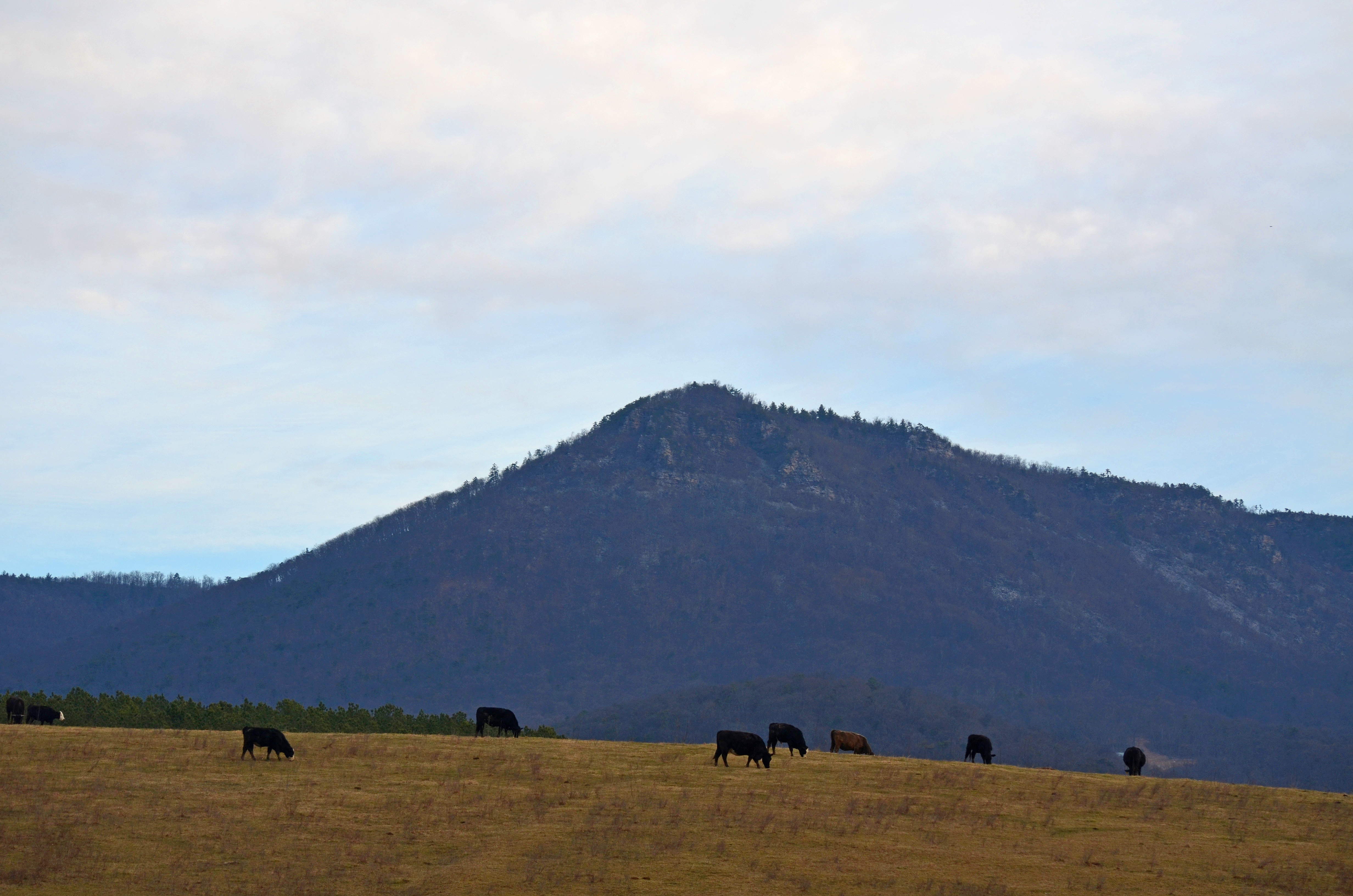
As part of a long weekend in central Virginia recently, Theresa and I took a day and visited Shenandoah National Park, driving the entire 109 miles of the famous Skyline Drive-from Front Royal to Rockfish Gap. It was beautiful, very brown at this time of year, but still beautiful. It’s a humbling feeling to gaze out on the distant mountains and valleys for miles- looking west past the Massanutten Mountains, as the sun sets over the Alleghenies in West Virginia.

BRMts1 BRMts2

BRHiPt             CowMt

Turn 180 degrees and you can stare over the Piedmont, toward the historic city of Fredericksburg and the meandering waters of the Potomac River. You can see  a whole lot when you’re drive in the sky!

BeagleSign
We had to snap a picture of this sign!

Skyline Drive is an engineering marvel. The vision of the planners in the early 1930’s was to construct a road along the Blue Ridge, where popular new “motor cars” could reach the peaks and give visitors inspiring views from all directions. It was so important that construction began even before Congress established the national park.

Even though the landscape of Shenandoah National Park was dull brown and grey, and most living things were dormant, there was still a sense of awe driving along the top of the Blue Ridge Mountains at 3,000’ +/- elevation, for over 100 miles. We did encounter many deer, including one that wore a radio collar for some type of research, a few squirrels and the ghostly calls of soaring Common Ravens that seemed to echo from each mountain top.

DSC_0025 raven-300x168

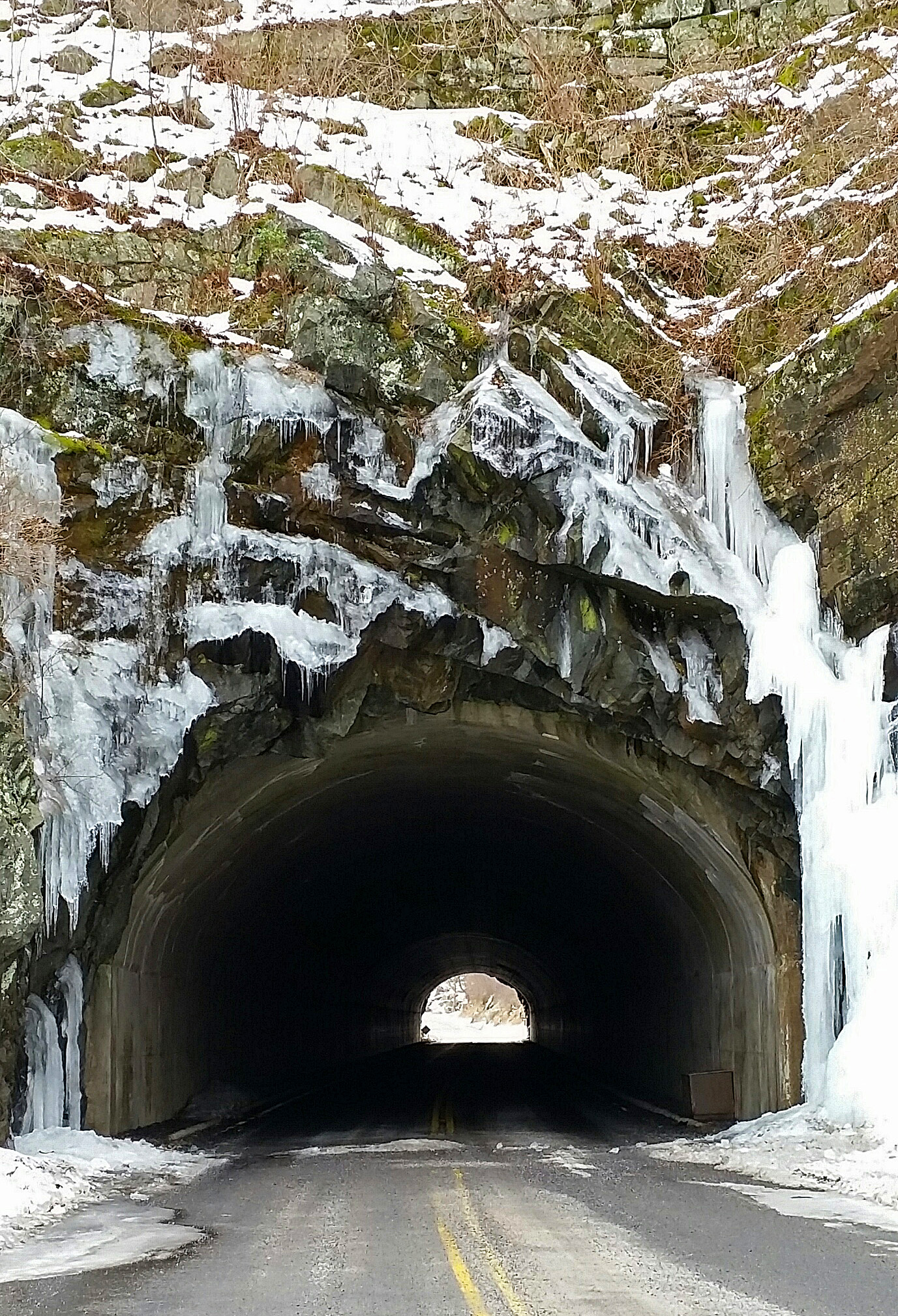
Probably the most interesting part of our driving tour was seeing the many ice formations along the roadway. These large frozen sculptures are created when water runs over rock outcroppings during the day, then re-freezes during the cold nights. Some of them towered almost 20’ high. I couldn’t understand why Theresa was reluctant to stand close to one so I could create a photographic memory. Stop after stop, I kept trying to coax her to get a bit closer, until a large chunk of melting ice came crashing down a few feet from her. I politely asked her to step over the fallen iceberg so I could get a good focus. The last thing I remember was a few choice words, and what I thought was a large piece of hail, came thrusting through the air at my head. The photo opp was done! The falling ice almost claimed Big Blue as well. We quickly stopped in the middle of the road (keeping one eye out for traffic) to snap a couple pictures of a cool-looking tunnel surrounded by ice and snow, when a piece of ice about the size of large basketball made a landing about 50’ from where the truck was parked. When we got back in the truck, we gunned it through the tunnel entrance at warp speed, hoping a landslide of ice and rock wouldn’t cover our trusty vehicle, only to find a safe, secure parking area on the other side of the tunnel!

icelady IceCoupleBRtunnel

                                 Like creepy alien critters, water flows under a sheet of ice

The Shenandoah Valley is a special place. A landscape bounded by mountain ranges where the Shenandoah River lazily snakes its way past farms and small towns. And standing to the east, the majestic Blue Ridge Mountains, with a scenic road that connects peak after peak. We will return in one of the green months, and hopefully, in the autumn to enjoy some brilliant fall foliage. But most of all, we look forward to returning to the sky!

Early to Rise

Sunrise. Dawn. Daybreak. Early Morning. First Light. Call it would you like, but every sunrise brings new life, new challenges and new opportunities. One quote I found several years ago, simply states, “Every human should rise early at least once per week and experience a sunrise. No chores, no obligations, just wander outside and look, listen and breathe it in.” I agree wholeheartedly! Early morning is also my favorite time of the day, when nature awakens and begins to stir.

GLSunrise SunriseFoxtail2Most critters become active as the sun begins to rise, prompted mainly by the need to find food. Whether it be hunting another animal, or simply searching for seeds or berries, animals must eat, especially after a long night of not eating. Birds are most active at dawn. Visit a Pennsylvania forest in late May or June at daybreak, and you’ll have a front row seat to a magnificent concert of some of our native songbirds. If you ask any hunter or angler when the best time to harvest game or fish is, I bet most will tell you they prefer to be in their tree stand or boat, at first light. There are a few exceptions in the animal world to this sunrise rule-reptiles, amphibians and many insects. These animals are cold-blooded, which means their body temperature is dependent on the air temperature. As the sun rises higher and warms the air, snakes, turtles, frogs and toads begin to move about, and many types of flying insects take to the wing. However, unlike most animals, many humans may not embrace a sunrise like I do, while others thrive in the early morning.

sunriseheron

A Great blue Heron takes off at sunrise

TyDadFish1
Tyler fishes for Redfish at sunrise in St Joseph Bay, off the NW coast of Florida

My wife is a morning person. Many days she reminds me of the old promotion slogan for the Army, “Doing more by 8:00 am than most people do all day,” including me! Almost every weekday morning, she’s up early with the two beagle boys before there’s even a hint of sunlight. She’ll finish a couple reports for work, throw in a load of laundry and make plans for that night’s supper-then quietly jumps in her car for work and heads east toward the rising sun! When not working, she simply enjoys watching the sun rise, and often joins me on the weekends for an early morning birding trip, or local hike. On the other side, is my daughter, who still enjoys the outdoors, but does not classify herself as a morning person. She prefers to sleep in a bit later and will wait to hear about my morning adventures and stories after she’s had her coffee and the sun is much higher in the sky. But our children have seen the sunrise on several occasions. In spite of some peaceful objections, we’ve always tried to catch at least one sunrise together as a family during some of our past vacations. We’ve been blessed to watch the sun rise over some special places, such as the north rim of the Grand Canyon on a brisk November morning, over the rolling waves of the Atlantic from the warm sands of the Turks & Caicos Islands, and sat in awe as the early morning sun peaked over the Wasatch Range in Utah. We shared some early morning rays of sunshine together in the rainforest of Belize and witnessed a fantastic sunrise over the cold, clear waters of Lake Superior in Northern Wisconsin.

DSC_0053 morning

OLYMPUS DIGITAL CAMERA
Theresa & Darby pose for an early morning photo, as the sun rises over the Grand Canyon, AZ
PI4
Theresa and I enjoyed a fantastic sunrise over Lake Erie in Presque Isle SP, in Erie.


I think most people who rise early would tell you one of their favorite things about sunrise, is the sunrise! There are so many wonderful places to view the rising sun and each location can create a special memory, even in your own backyard. Every season can bring new views and fresh vistas as the sun rises over the eastern horizon. As an outdoor photographer, I see a warm, orange sky at dawn in June, or a crimson horizon on a cold winter morning like a canvas that’s been freshly painted, begging me to take its picture.

As Mark Twain once wrote, “A sunrise is like a new opportunity, if you wait too long, it will be gone!”  So, jump out of bed, throw on some clothes, get outside and watch the sun rise. I promise it will be well worth it! Enjoy!

sunburst